Measure the route as well as the shelf
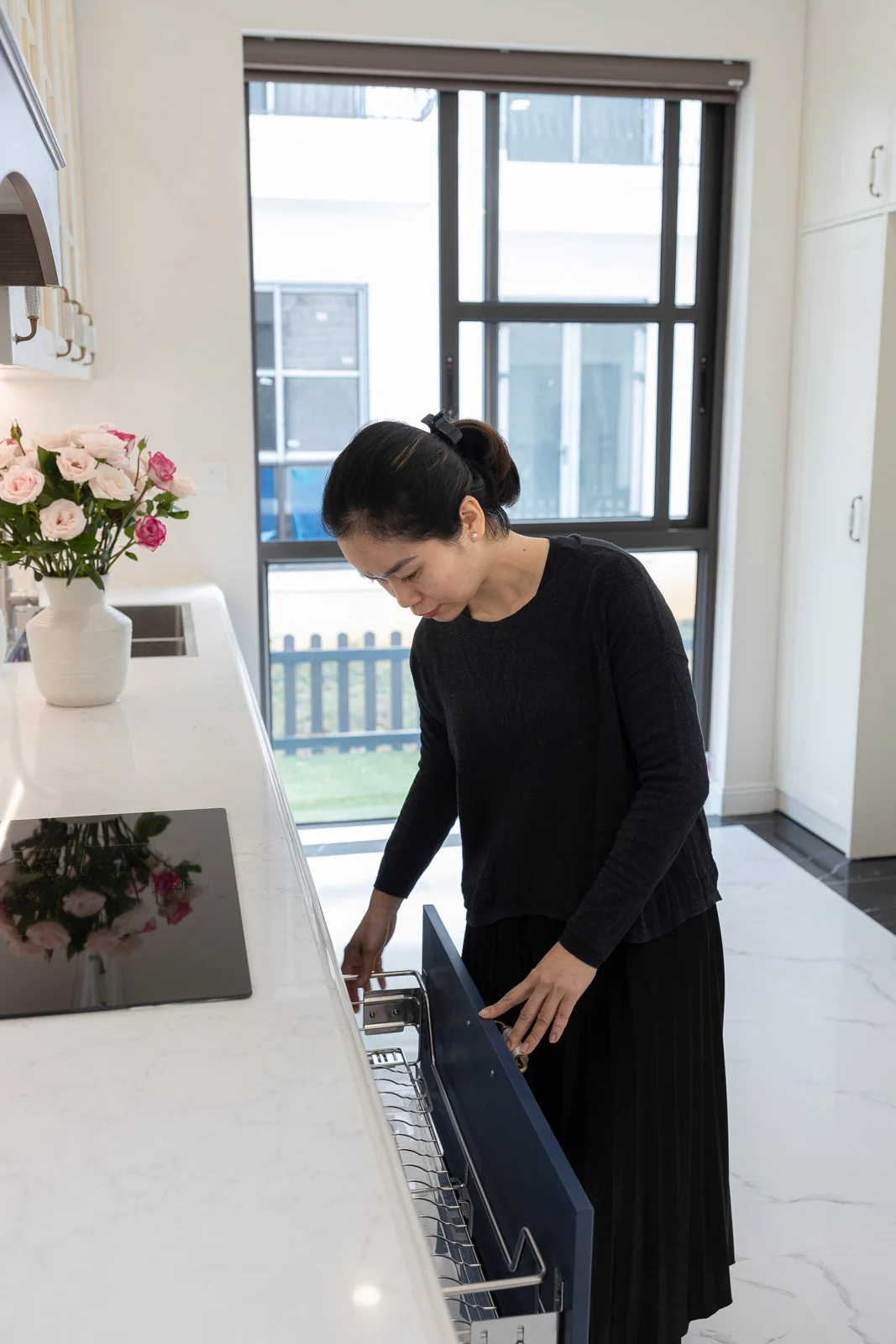
Record the clear width, depth and height of the intended space. Allow for shelf supports, cupboard hinges, skirting boards and any lip that a box must pass. Under-bed storage also needs a clear path for pulling the box out without lifting the bed or moving several other containers.
Use external dimensions for fit, including protruding handles and lids. The internal measurement is the one that matters for contents. Tapered sides, rounded corners and recessed lids mean a box's useful floor area can be much smaller than its widest outer measurement. Ask for the internal base dimensions if you need to store a rigid object.
Count boxes that have a job
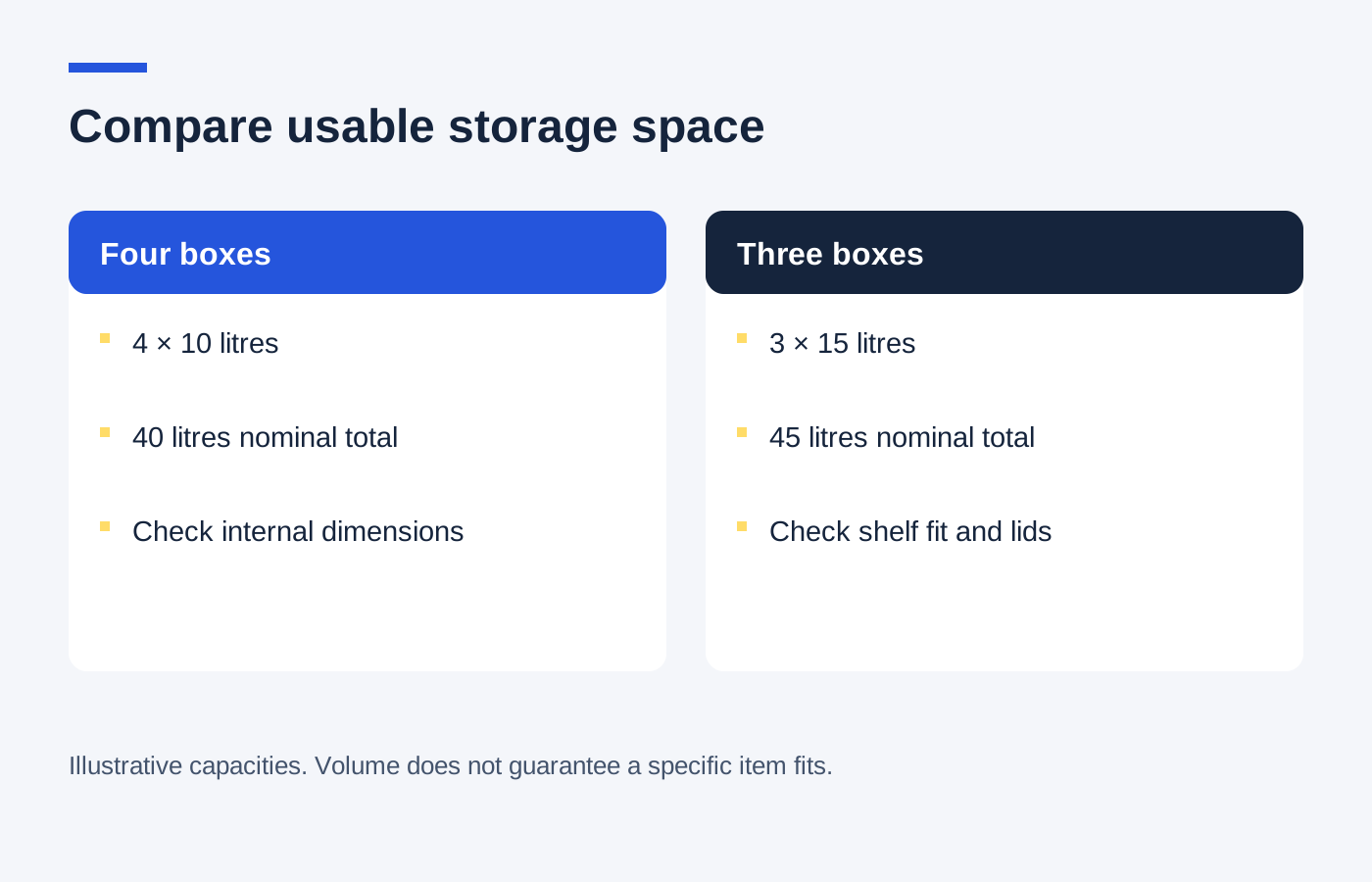
A nesting set may include one useful large box and several smaller sizes you have no reason to fill. Assign a group of belongings to each size before comparing the price. If the set costs less than the large box alone, the extras may be harmless, but they still need somewhere to live.
Do not assume boxes of the same advertised capacity share lids or stack securely together. Look for the manufacturer's description of compatibility and stacking limits. A lid that merely rests on top is different from one with clips, and neither description automatically means a container is airtight or waterproof.
Test access with a simple stand-in
Mark the box footprint on paper or use a cardboard carton with similar dimensions. Try reaching the position and taking it out as you would during normal use. A perfect geometric fit can still be inconvenient if it requires emptying the shelf above every time.
For heavy contents, check the product's load guidance and whether you can carry the filled box. Smaller boxes can be easier to handle even when their price per litre is higher. Storage value comes from using the contents comfortably, so choose a size and closure you can repeatedly open, move and put back rather than the largest capacity shown on the sale page.