Put both packs on the same basis
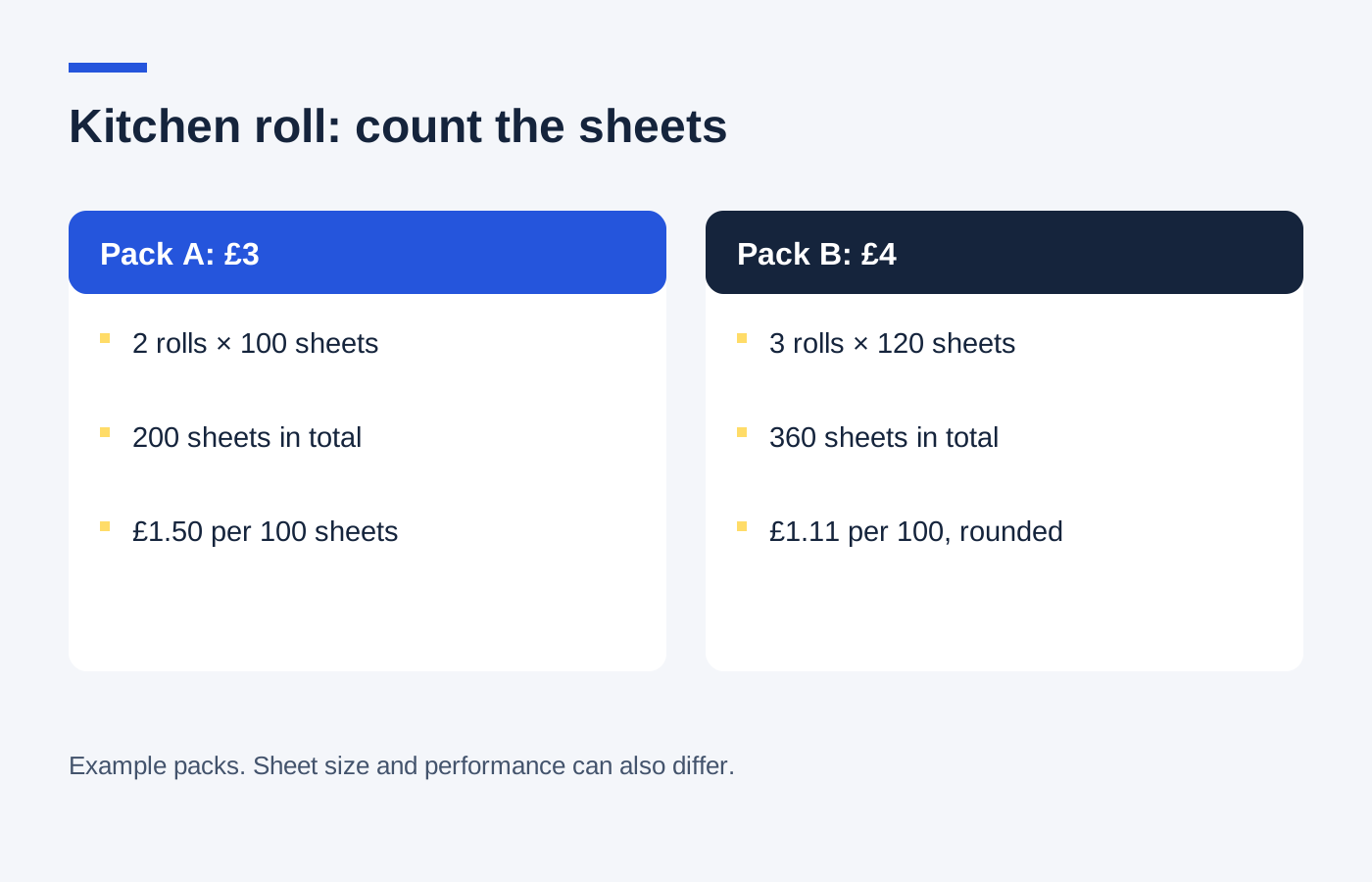
Divide the amount you would actually pay by the tablet count. In a hypothetical comparison, 40 tablets costing £6 work out at 15p each, while 60 costing £10.20 are 17p each. The smaller box is cheaper per tablet even though the larger one offers more washes before you need to shop again. Include any delivery charge that exists only because you are placing this order.
Check whether the listing contains one box or several. A photograph of two packs is not enough evidence of quantity. Also make sure you have compared the same product range: a basic tablet and a product with additional features need not perform identically simply because they share a brand name.
Count the extras you actually need
Read your dishwasher manual alongside the detergent instructions. Do not assume that an all-in-one claim removes every requirement for salt or rinse aid in your machine and water conditions. If you normally buy these separately, their use belongs in your household washing budget, but there is no need to invent a precise saving without knowing how quickly you use them.
A tablet that costs less is not good value if it does not suit your usual programme or leaves you repeatedly washing items again. Equally, a premium description does not establish that the extra cost will help with the plates and pans you normally load. Keep observations about your own results separate from advertising promises.
Before buying several boxes, check that the storage area is dry, secure and suitable for keeping the original packaging. Use tablets according to the label; cutting or altering them to reduce the price per wash can interfere with the intended dose. A sensible offer is one you can use correctly and store without creating an oversized reserve.