Compare a consistent quantity
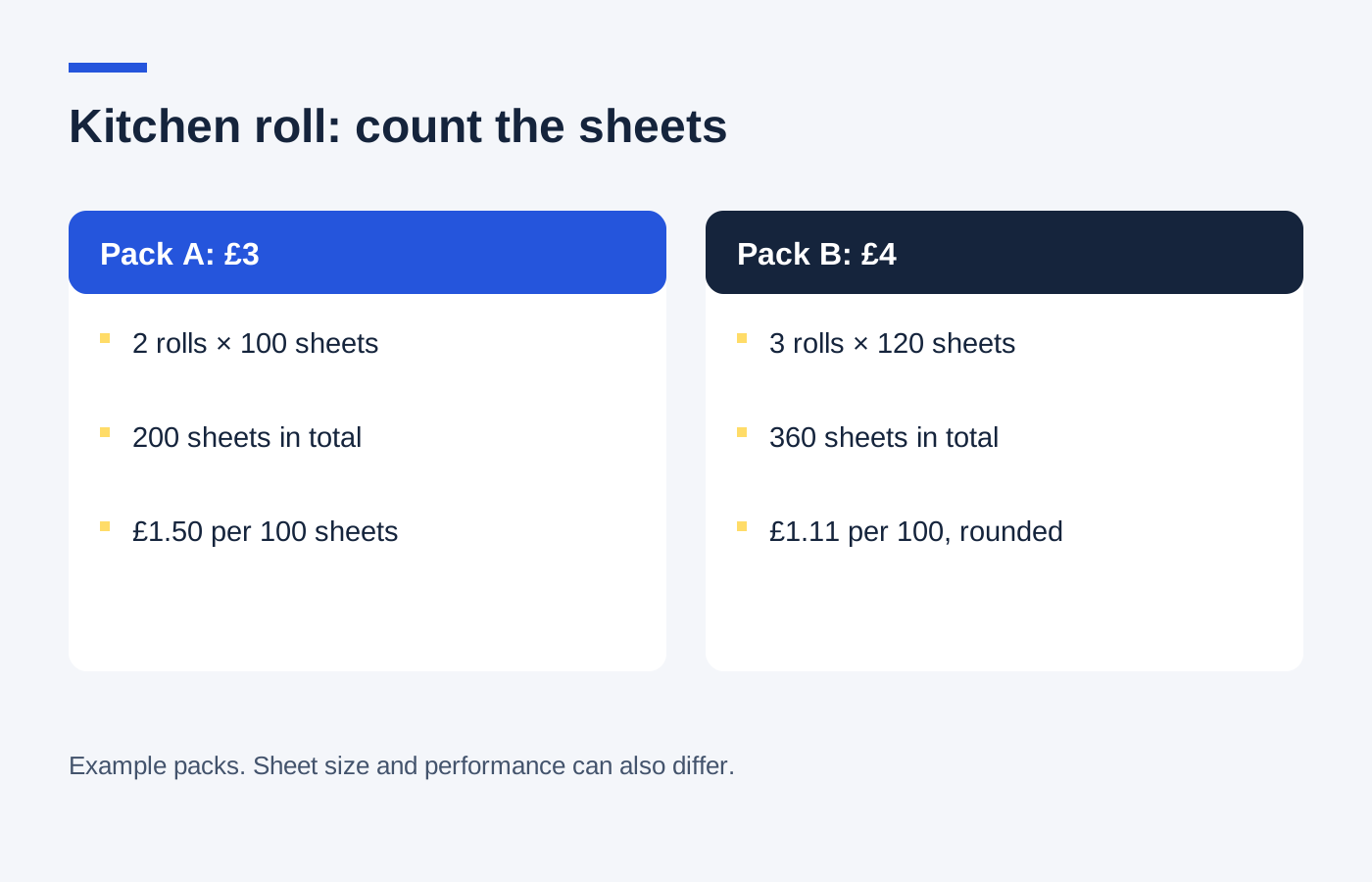
Start by multiplying the number of rolls by sheets per roll. For example, a fictional two-roll pack with 100 sheets on each roll contains 200 sheets. A four-roll pack with 50 sheets each also contains 200. If their sheet dimensions are equal, their prices can be compared directly for quantity.
If dimensions differ substantially, compare area where the information is available. Two hundred sheets measuring 20cm by 20cm provide eight square metres of paper. Two hundred sheets measuring 25cm by 20cm provide ten square metres. This measures quantity, not absorbency or strength.
Consider the perforations and task
A half-sheet format can help with small jobs if you actually tear off the smaller amount. For a large spill, several small sheets may be used together. Do not assume the advertised sheet count describes equal pieces across brands or predicts exactly how long the roll will last.
Use the product according to its instructions. A low-cost paper that needs several sheets for a task may not be cheaper per use than a stronger alternative, but that difference is best assessed with a small trial rather than a large speculative stock-up.
Keep alternatives in the comparison
For tasks where a washable cloth is appropriate, compare the ongoing routine rather than buying more disposable paper automatically. Different jobs need different handling and cleaning, so choose an option suited to the use rather than claiming one material is best for everything.
If buying online, include delivery only as part of the full order comparison. A cheap bulk pack ordered separately can become expensive once postage is added. Check cupboard space and the amount you normally use before choosing the largest bundle.
Record the useful pack details when you find a product that works: total sheets, dimensions if stated and price paid. Those facts make the next offer easier to judge than descriptions such as jumbo or super absorbent on their own.