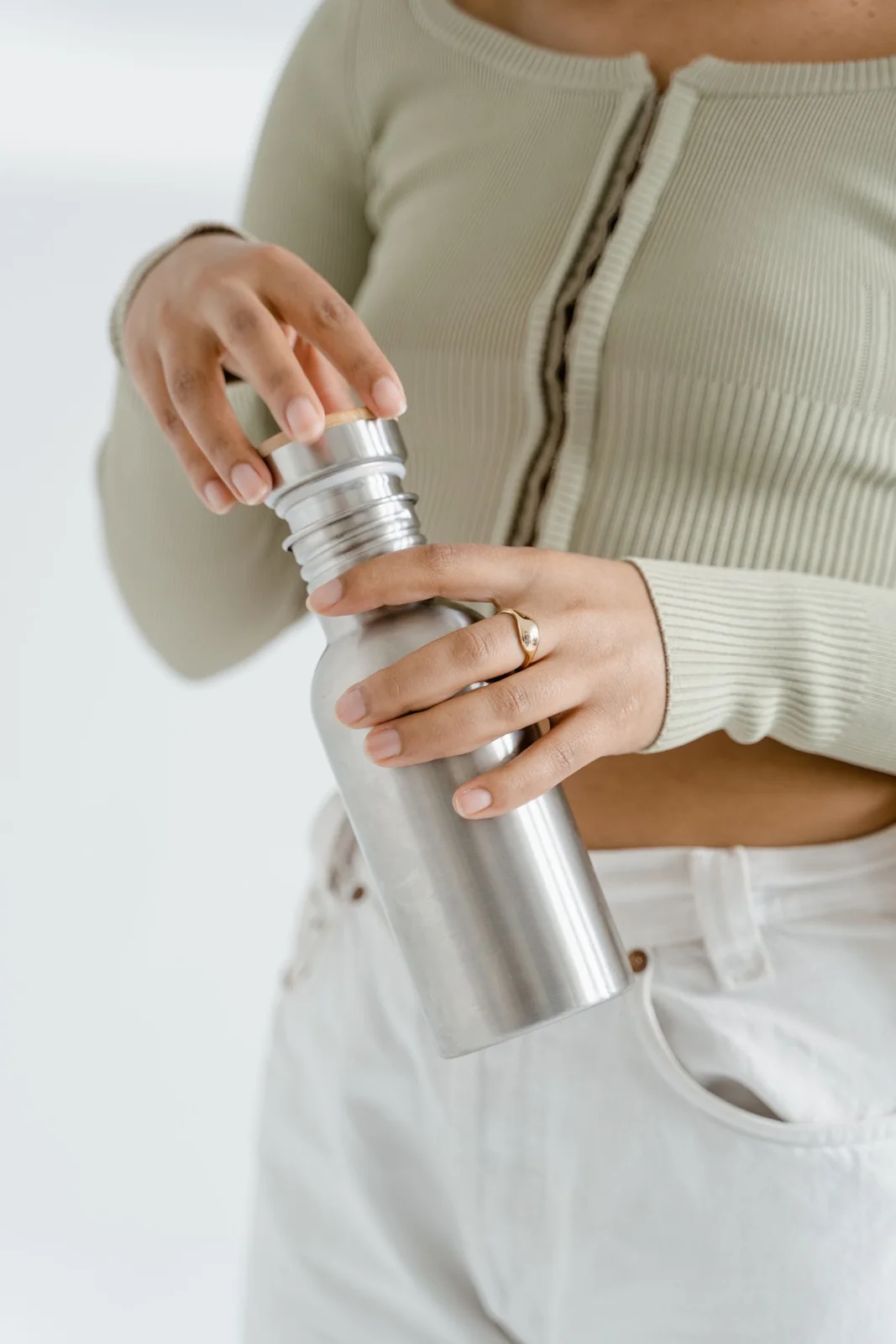
Find the model name behind the photograph
Two bottles from the same brand may have different necks, threads and seals. Note the range, generation and capacity, then open the replacement-parts page for that precise version. A cap advertised for an older collection is not necessarily interchangeable with a newer bottle that looks almost identical.
Chilly's, for example, distinguishes its Original and Series 2 accessories and states that Original lids are not compatible with Series 2 bottles. The useful lesson is to check the compatibility statement, rather than to treat a familiar logo as proof that a spare will fit. Ask the manufacturer if the listing does not name your version.
Price a replacement you could actually order
Look for lids, seals, straws and any collar that a replacement assembly requires. A page showing a part establishes less than a page showing the correct part available to buy. Check its price and postage, and whether small components are sold individually or only inside a larger kit.
Consider a hypothetical £18 bottle with a £6 replacement lid and £3 delivery. Replacing a lost lid would cost £9 at those example prices. A £25 bottle whose compatible replacement cap costs £4 delivered has a different repair cost, but that alone does not justify spending more today. Compare the bottles on their main uses first; use the spare-part cost to understand the consequence of losing or wearing out a component.
Do not count on a warranty covering ordinary wear or a lost cap. Read the actual terms if warranty coverage influences your choice. Keep the receipt and model details somewhere you can find them without needing the original packaging years later.
Try the bottle against the space it will occupy
Measure the narrowest part of a bag pocket or cup holder. Compare that with the bottle's outside diameter, including any sleeve, and allow for the height needed to remove it. A larger capacity can be useful on a long day but may make a frequently carried bottle inconveniently bulky.
Think through where you refill and drink. A wide opening may be easier to reach with an appropriate cleaning brush, while a particular spout may suit the way you drink on the move. Check the manufacturer's instructions for allowed drinks and temperatures. Do not assume every lid can handle the same contents as the bottle body.
Include cleaning in the purchase decision
Read separate care directions for the body, cap and removable pieces. Dishwasher suitability should be stated for the relevant component, not inferred from its material. Look at diagrams showing which parts can be removed and which are meant to stay assembled; pulling apart a sealed mechanism is not the same as routine cleaning.
For the final comparison, write one line for each candidate: bottle price, usable capacity, dimensions, required care and compatible spare cost. Choose the combination that fits your routine. Extra lids in different colours are optional accessories, not an automatic saving, even when adding them unlocks a basket discount.