Write a working pan list
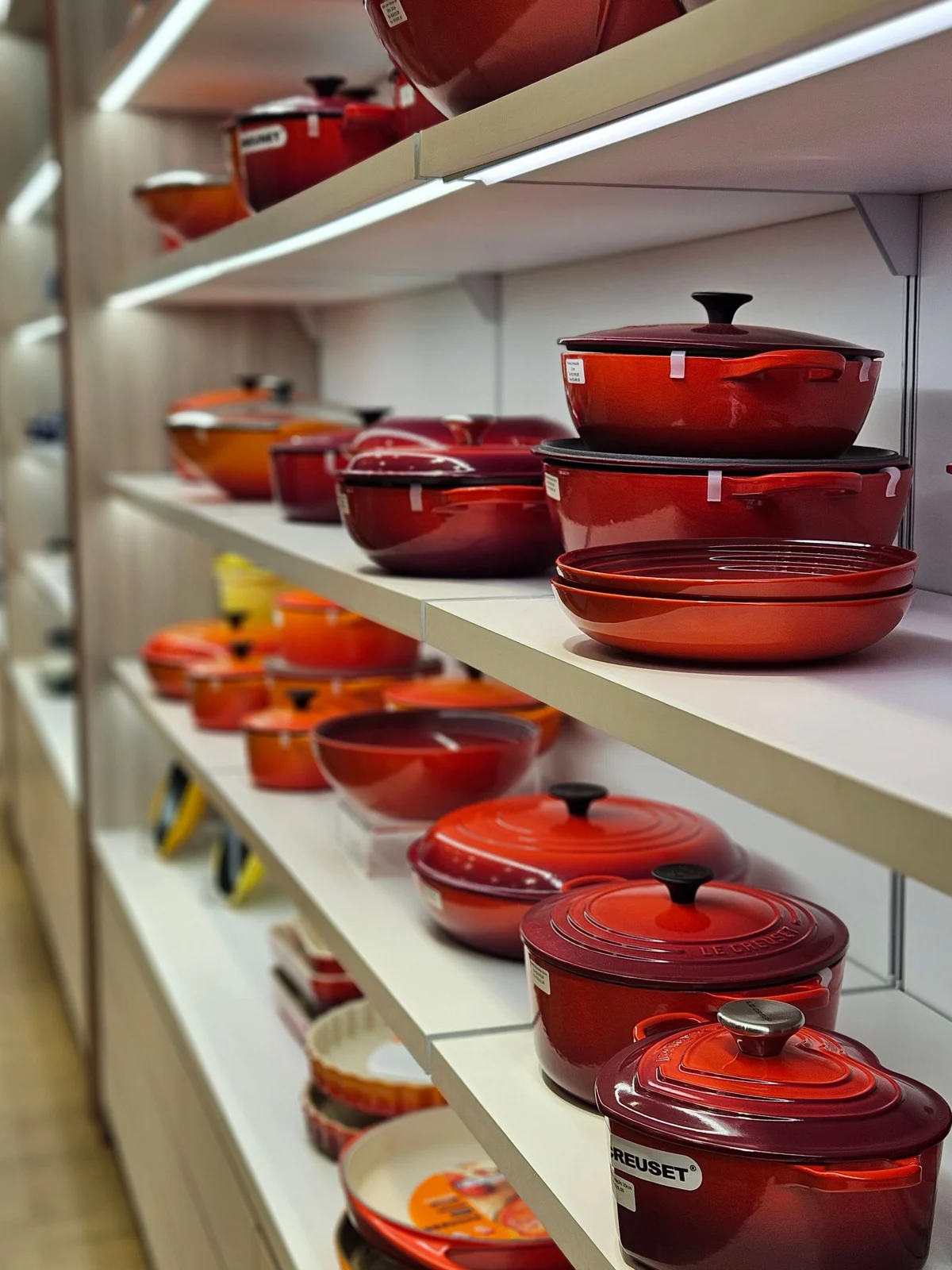
Look at what is regularly on the hob together. If you often cook pasta and a sauce, you may need two useful pan sizes, not a row of almost identical saucepans. If the frying pan is the only worn item, replacing it separately may solve the problem without adding more lids or storage pressure.
Record the diameter and capacity of the pans you like, along with anything that annoys you. A pan that is too small for a family meal or too heavy to lift comfortably is a useful reference point. Do not assume every item in a discounted set will share the performance or handling of the one piece you have tried.
Check compatibility item by item
Confirm suitability for your hob, including induction if relevant. Check whether any stated oven limit applies to the body, handle and lid together. A removable handle or glass lid can have different instructions from the pan itself. Dishwasher compatibility should also be verified rather than inferred from the material name.
Think about handle clearance and hob spacing. Two large pans may technically fit the rings but leave their handles awkwardly close. If possible, compare the base diameter with your hob guidance and the full width with handles against the cupboard. A pan's advertised diameter is not a substitute for those details.
Put a price on the pieces you want
Take a hypothetical £90 set containing three saucepans with lids and two frying pans. Suppose you only need one saucepan and one frying pan, available separately for £25 and £30. The relevant comparison is £90 against £55, not an average price across every object in the box. The additional cookware has value only if it has a genuine role.
Separate purchases can let you choose different materials or sizes for different jobs. A matching set can simplify compatible lids and storage, but check that those benefits really apply. Do not attribute extra savings to spare pieces you might one day use without a concrete plan for them.
Look beyond the first order
Read care instructions for coatings, utensils and cleaning before purchase. The way you cook and wash pans should fit those requirements. Check the availability of replacement lids or handles if the design relies on them, and keep the precise range name rather than just the brand.
If buying a reduced display item, inspect the cooking surface, base, handle attachments and all included parts. Ask how its condition is described on the order. A reduced price for cosmetic packaging damage is a different proposition from a pan with uncertain wear. Choose the smaller, suitable solution when the larger set mainly offers a more impressive box.