Look for usable offer details
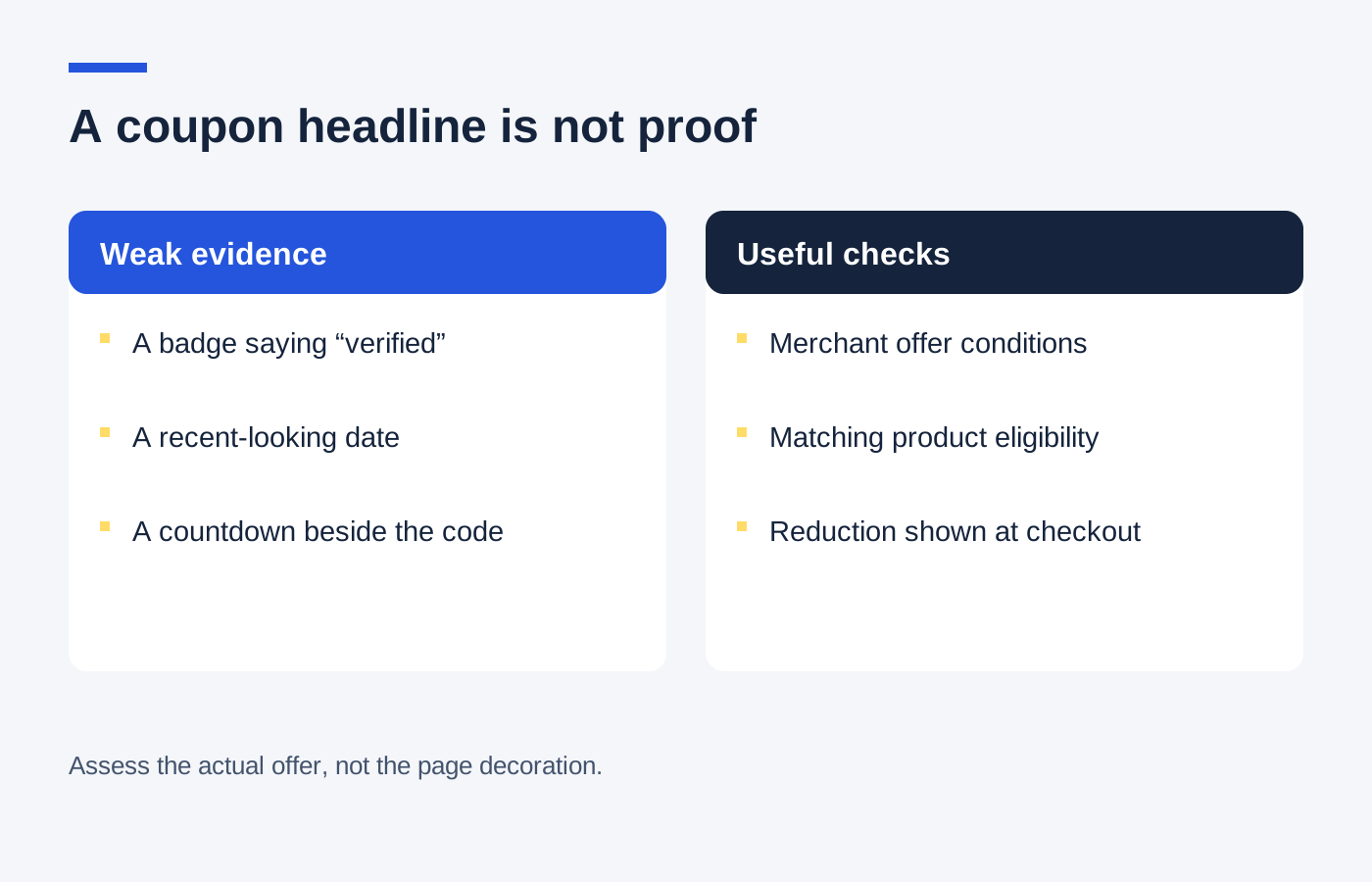
A useful listing identifies the retailer, the benefit and the main restrictions. It should distinguish a code from a sale link or general shopping advice. “Up to” wording, selected-product exclusions and first-order limits matter because they determine whether the headline is relevant to your basket.
A badge claiming that a code is verified is not proof that it works for your account, country or products. Check whether the page explains what was verified and when. A code that once worked may have expired, reached a limit or been restricted to different customers.
Watch what the page asks you to do
Be cautious if revealing a supposedly ordinary voucher requires payment details, an unrelated subscription or the installation of software from an unfamiliar source. Read the action you are authorising instead of following a button simply because it says “continue”. A retailer code should be tested at the retailer's own checkout.
Advertising links and buttons can resemble a site's own controls. Check the destination when possible and close unexpected tabs rather than continuing through them. An affiliate relationship can explain why a publisher earns from a purchase, but it does not establish that every code on the page is accurate.
Never provide a retailer password to a coupon page. If an account login is needed for a genuine member offer, navigate to the retailer or recognised scheme directly. Use a separate, strong password for each important account rather than reusing one while chasing discounts.
Verify the shop as well as the voucher
A working-looking offer can lead to an imitation storefront. Check the domain carefully and compare it with the retailer's known address. The NCSC notes that fraudulent shops can copy familiar design and branding, so appearance alone is not enough.
A secure connection protects data in transit but does not prove that the seller is honest. Look for meaningful contact details, delivery information and returns arrangements. Search for evidence about an unfamiliar shop beyond the voucher page linking to it.
Use a stopping rule
Try a small number of clearly relevant codes, checking the payable amount after each. If a page provides no conditions or keeps recycling the same expired offer, leave it. Your time is part of the cost of finding a discount.
Keep a screenshot if a specific misleading claim caused a problem, but do not spend more money to prove that a voucher should work. You can compare the retailer's confirmed price with other shops or decide not to buy. A discount page is useful only when it makes that decision clearer.