Find the point where the offers are equal
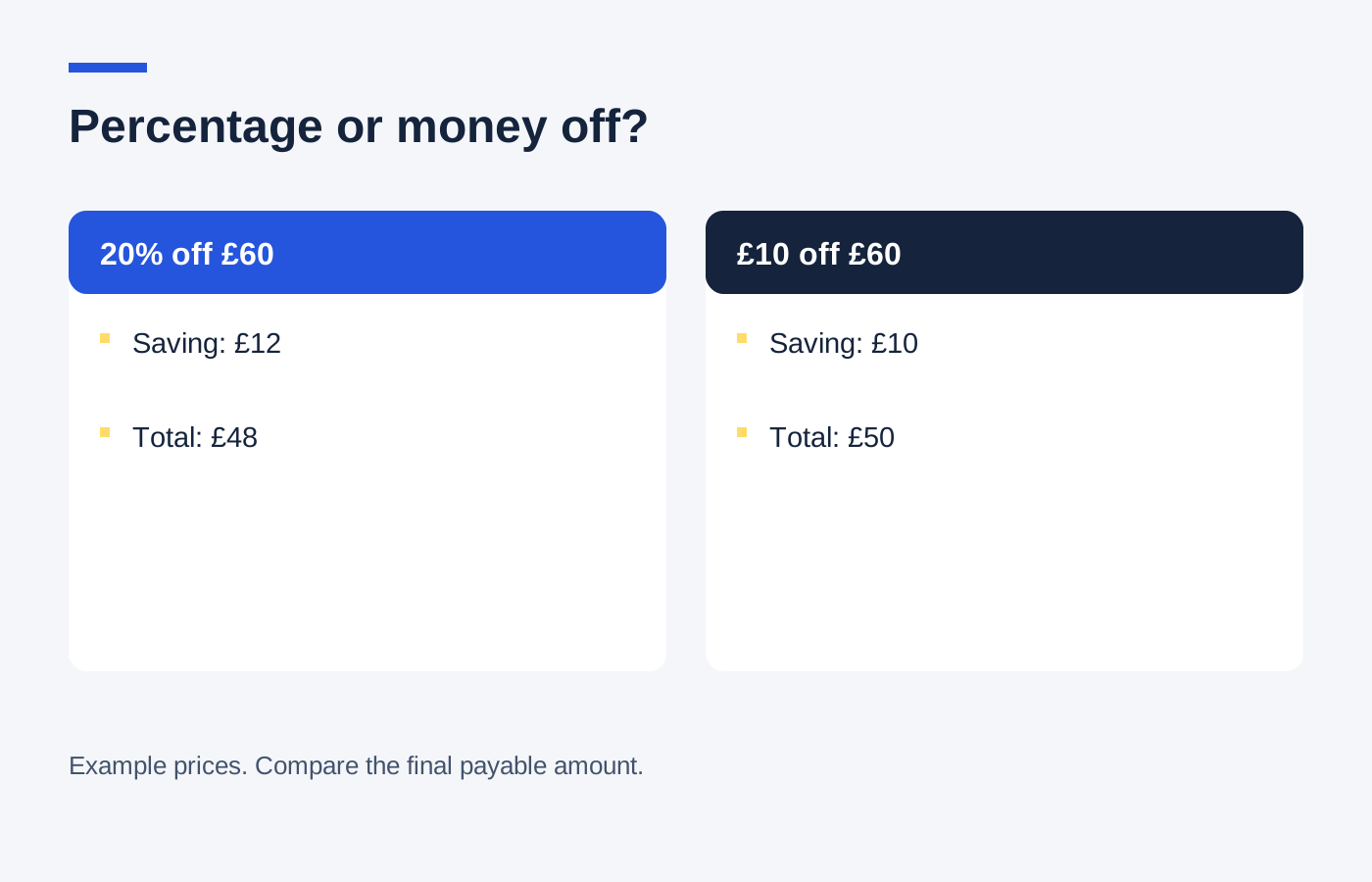
Suppose, purely as an example, a shop offers either 15% off or £12 off. Divide £12 by 0.15 to find the crossover: £80. Below £80, the fixed discount is larger. Above £80, the percentage discount is larger, provided both offers apply to the whole basket and have no savings cap.
For a £60 eligible order, 15% removes £9 and leaves £51; £12 off leaves £48. On £120, the percentage removes £18 and leaves £102, while the fixed offer leaves £108. These examples compare discounts, not real offers, and assume the items and delivery option stay the same.
Use the eligible amount, not the amount in the corner
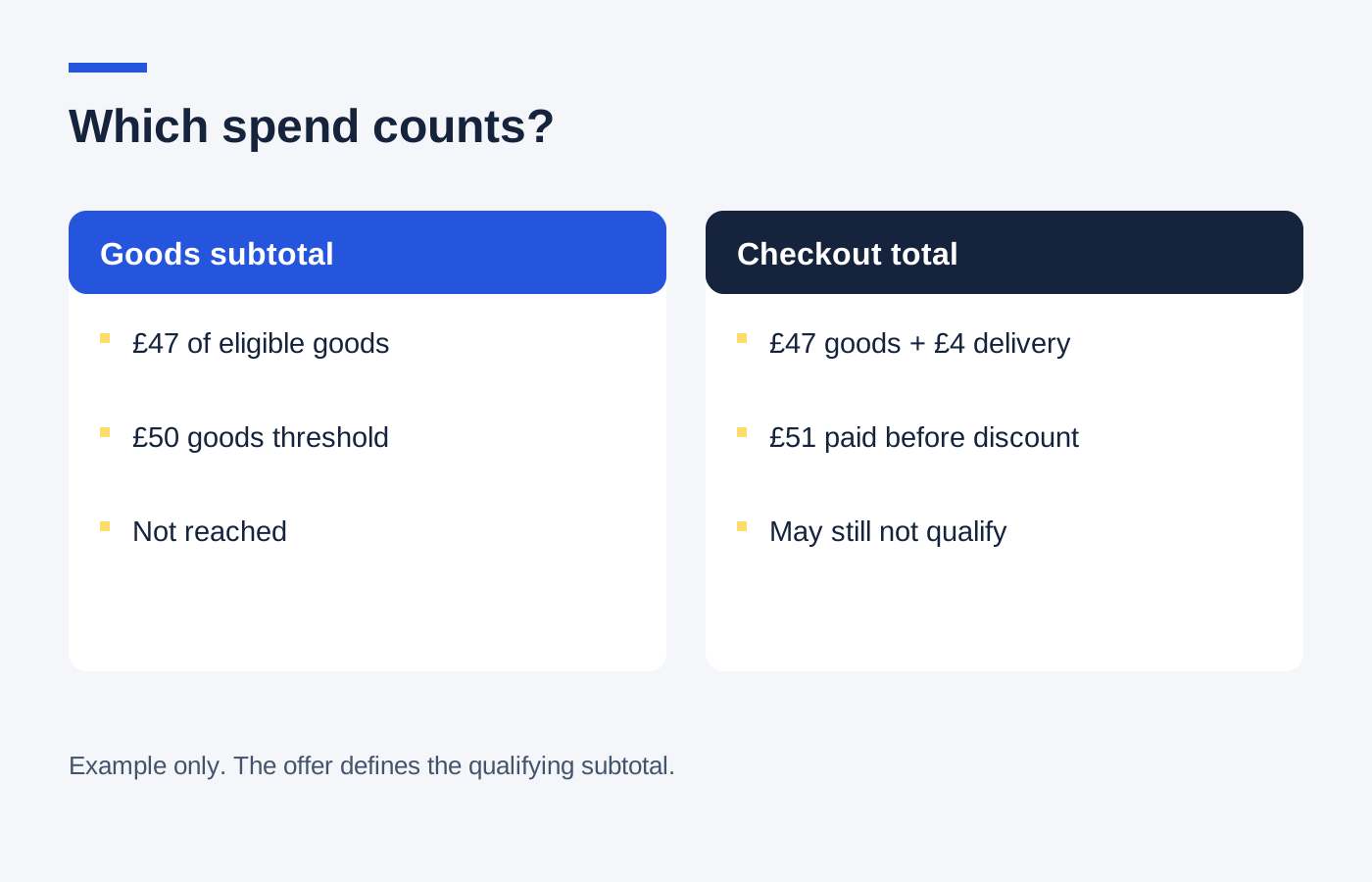
If your £120 basket contains a £40 excluded item, a 15% code may apply only to £80. That makes the saving £12 rather than £18. A voucher might also require a minimum eligible spend that excludes gift cards, delivery or products from another seller. Check the conditions for each offer separately; matching headlines do not imply matching rules.
A maximum saving changes the crossover calculation. If the percentage offer is capped at £10, it cannot beat a qualifying £12 discount on discount value alone. Likewise, an offer restricted to one item should be calculated on that item's qualifying price, not on all the products beside it.
Compare the total you would actually pay
Apply one offer and note the item subtotal, reduction and delivery charge. Remove it before testing the other. Some checkouts replace an existing offer rather than adding another one, so a newly accepted code does not necessarily mean a lower price.
Consider a hypothetical £82 basket with free delivery above £75 after discounts. A £12 reduction takes the goods to £70. If that triggers £4 postage, the payable amount is £74. A different offer with its own delivery rules could produce another result. Read the final summary instead of assuming free delivery will survive.
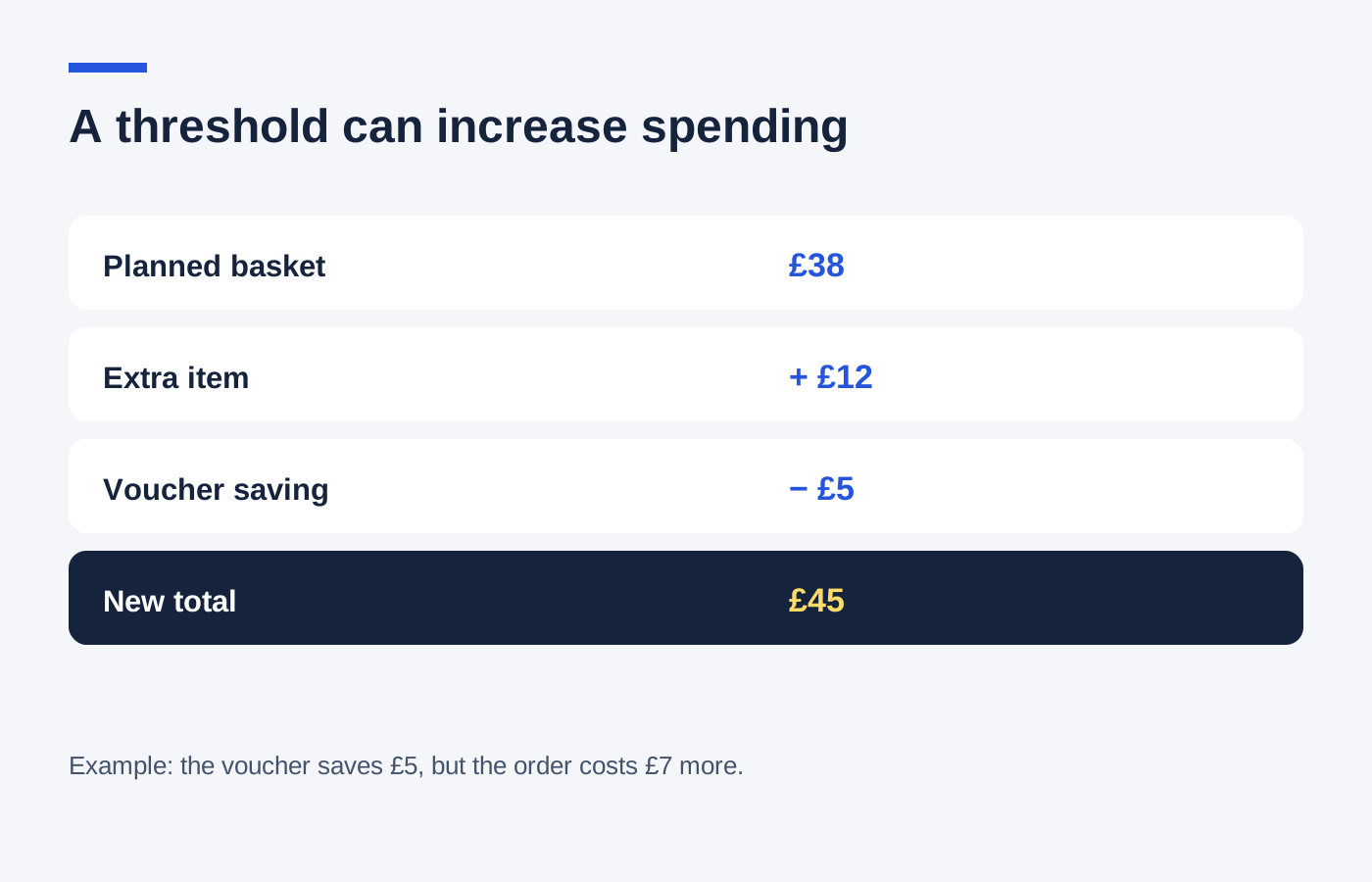
There is no benefit in enlarging an otherwise suitable order simply to cross the mathematical breakpoint. Use the items you intended to buy as the starting point. A larger discount on extra purchases can still leave less money in your account.