Calculate the cost of qualifying
Imagine a £43 order and an offer of £10 off when eligible goods reach £50. Adding a £7 item brings the goods to £50, then the discount takes them to £40. If delivery stays unchanged, you spend £3 less than on the original order and receive the extra item. That is different from saying the extra item saved you £10.
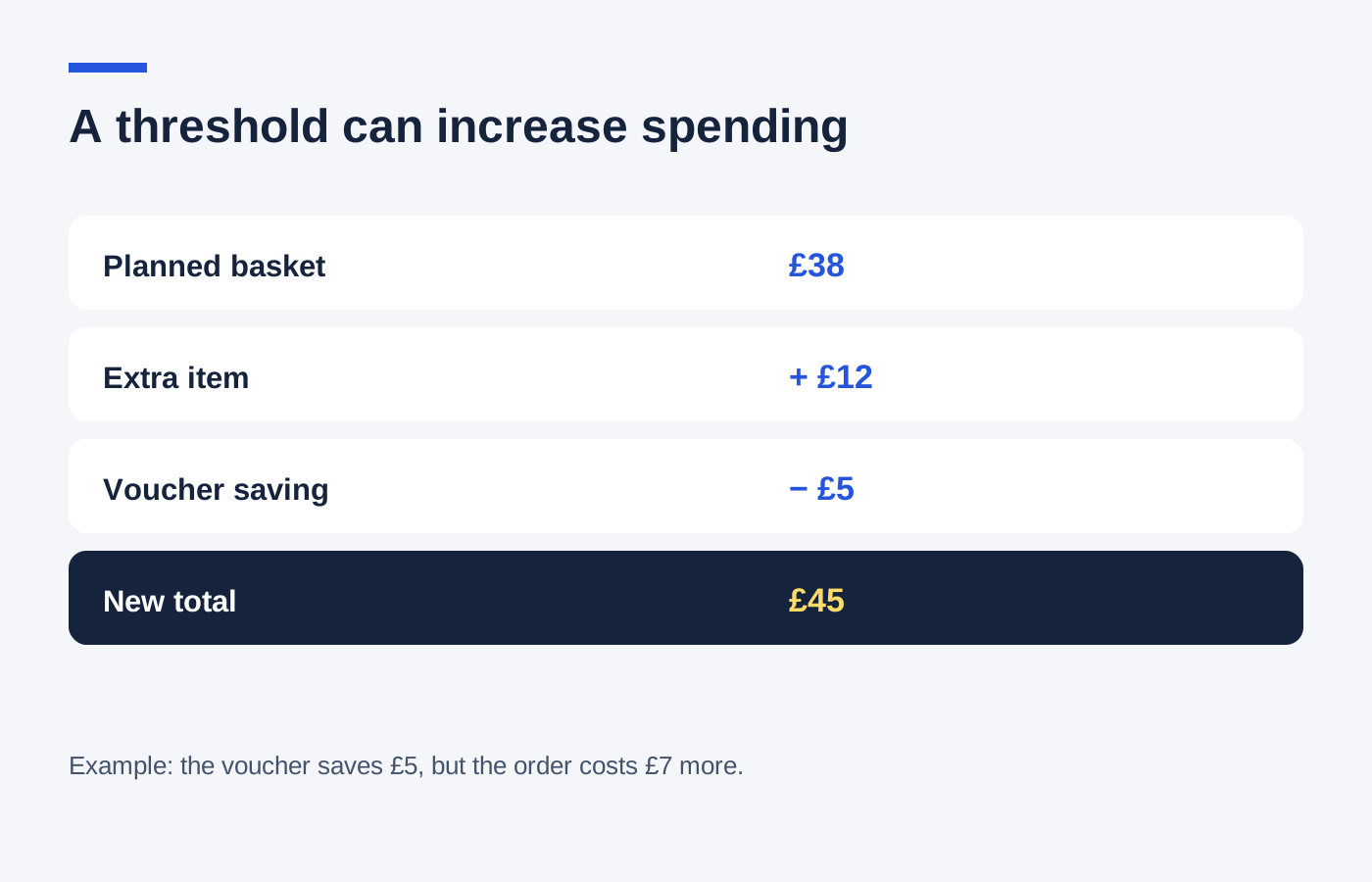
Now imagine that the cheapest suitable addition costs £15. The revised basket is £58, reduced to £48. You spend £5 more than the original £43 order. The additional item may justify that £5, but the order has not become cheaper. Both examples are hypothetical and exclude delivery so that the effect is visible.
Decide whether the extra item has a job
An addition can make sense when it replaces a purchase already planned for the near future. Check the exact size, quantity and usual price. A £7 consumable that you would otherwise buy for £4 is not worth £7 simply because it fills the gap neatly.
Avoid choosing a product whose storage, use or return is uncertain. Buying another shade to decide later can create a partial return, and the promotion's treatment of that return may affect the refund. A sealed spare of a frequently used product is easier to assess than a speculative gift with no recipient.
Check which subtotal the shop uses
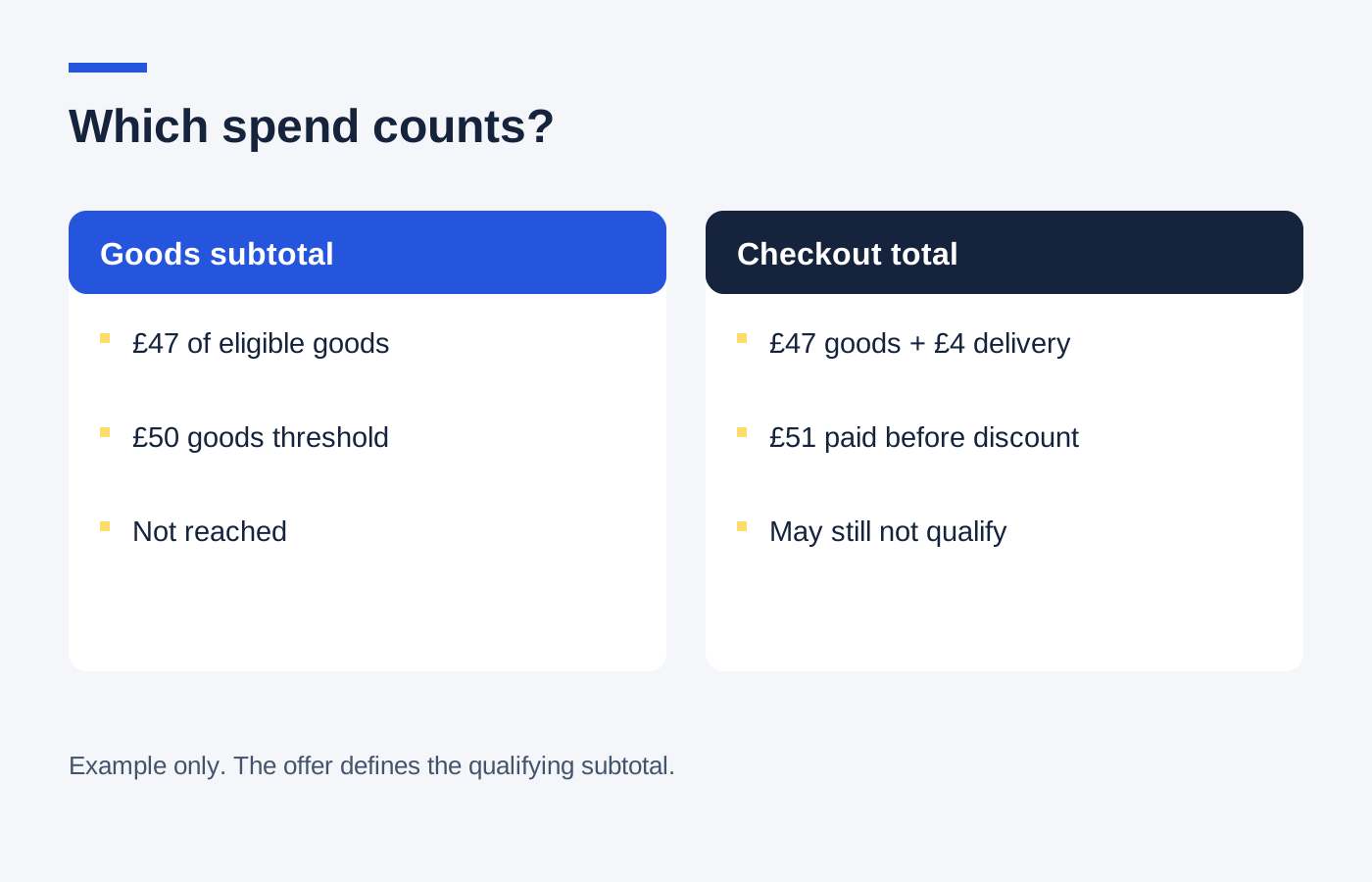
The minimum may apply to goods before or after other reductions. Some brands, marketplace items or gift cards may contribute nothing towards it. Delivery often appears in a separate line; do not count it unless the offer specifically does. An order total above the threshold can therefore still fail the eligibility test.
Look at the payment summary after applying the offer. Record the new goods total and delivery cost together. If the increase in spending is larger than the benefit you place on the extra item, remove it and keep the smaller order. A threshold is a condition of an offer, not a shopping target.