Set a search budget before you start
For a modest purchase, choose a short period in which to look for a clearly applicable offer. For a more expensive item, spend longer comparing actual retailers and product specifications. The size of the purchase should influence the effort, rather than the number of tabs already open.
Decide what would count as a meaningful improvement. Saving £2 on an order needed today may not justify another half hour, while a £40 difference on a planned appliance can justify careful comparison. Your own time and urgency determine the sensible boundary.
Recognise when you are repeating work
If several pages list the same code with no new terms, trying each listing does not create another offer. Note which code failed and why. A message about excluded products is unlikely to change because you found the same letters on a different website.
Keep the best confirmed basket total visible. Applying another code may remove an automatic offer or change delivery eligibility, so returning to a page is not enough; check that the previous price is restored. An accepted code can be worse than the promotion it replaced.
Move the decision forward
When the search limit is reached, choose among three clear options: buy at the confirmed price, compare a different shop or postpone the purchase. Continuing indefinitely because a better code might exist keeps the decision unresolved without changing the evidence.
For a repeat purchase, record the price you paid and the useful offer source. That small note can shorten the next comparison more effectively than saving a large collection of expired links. For a one-off product, retain the order details rather than every unsuccessful code.
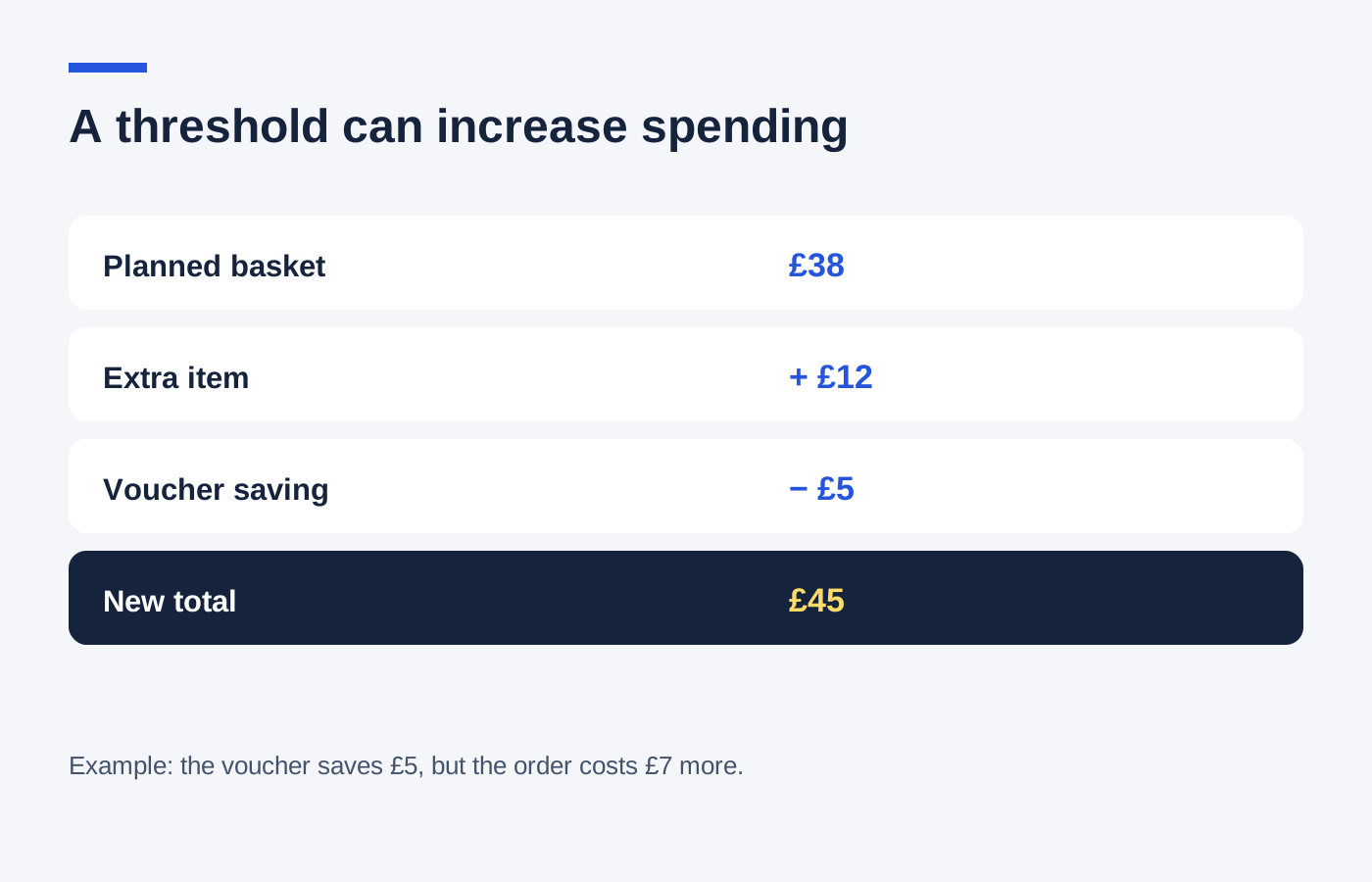
Do not add unwanted goods just to make the search feel productive. A £5 code that requires £20 of extra spending is not a reward for the time already invested. The objective is a suitable purchase at an acceptable total, and sometimes the strongest saving is deciding that you do not need to order today.