Find the complete deadline
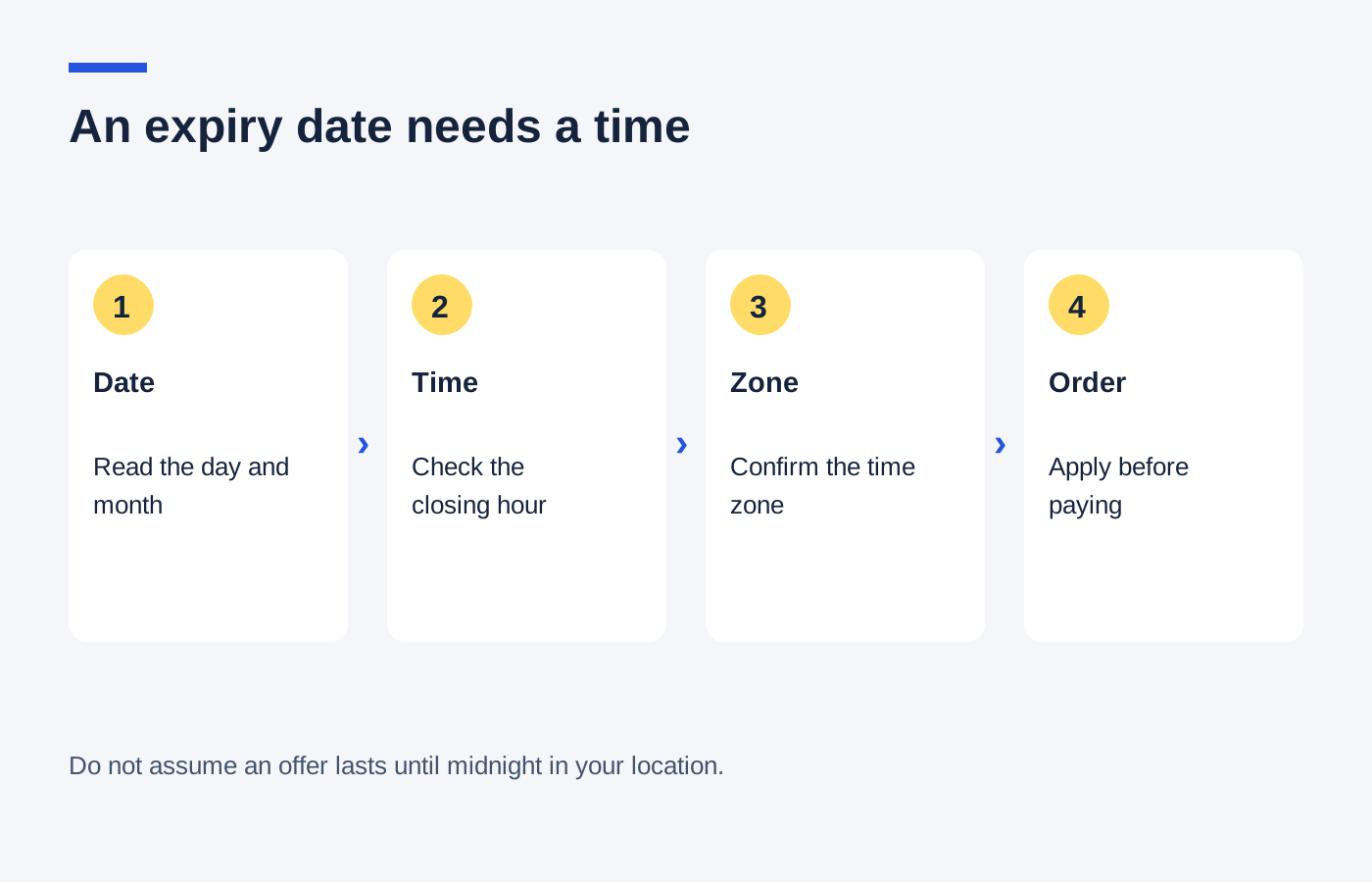
Read the email footer, offer page and linked terms for the calendar date and any stated time. A banner can be old, and a forwarded email may describe a promotion that has already ended. If the message says a code lasts for a set number of days, establish whether the period starts at registration, issue or another event.
A retailer serving several countries may use the time zone of its main market. Do not automatically translate midnight into your own local midnight. Where the terms specify a time zone, use that information; where they do not and timing is important, ask the retailer rather than building a last-minute plan on an assumption.
Leave room to complete the order
Putting goods in a basket does not necessarily reserve a promotional price or secure a voucher. The qualifying action could be placing an order, completing payment or another step stated by the retailer. Payment authentication, address checks and an unavailable size can all take longer than expected.
For an order you already intend to make, allow enough time to review delivery and returns before paying. Do not use a deadline to justify skipping those checks. If the purchase only seems worthwhile while a clock is counting down, pause and compare it with the price you were originally prepared to pay.
When the displayed dates disagree
Save the wording from the offer and the message shown at checkout, including when you saw them. A short enquiry can then identify whether the code has expired, reached a stated usage limit or failed for another reason. A retailer might explain or correct an error, but do not assume an expired offer will be reinstated.
ASA guidance treats closing information as a significant promotional condition where leaving it out could mislead. That does not mean every promotion has the same deadline or that a shopper can infer missing details. Use the retailer's current terms and keep evidence of any specific promise you relied on.
If the offer ends before you can make a considered decision, let it end. A missed discount costs less than an unwanted purchase that introduces delivery, storage or return costs.