Give the gift a personal value
Ask whether you would use the exact product, size, shade or fragrance offered. A gift set with unfamiliar contents may be worth less to you than its stated retail value. If the retailer can substitute items, check whether that possibility changes your interest.
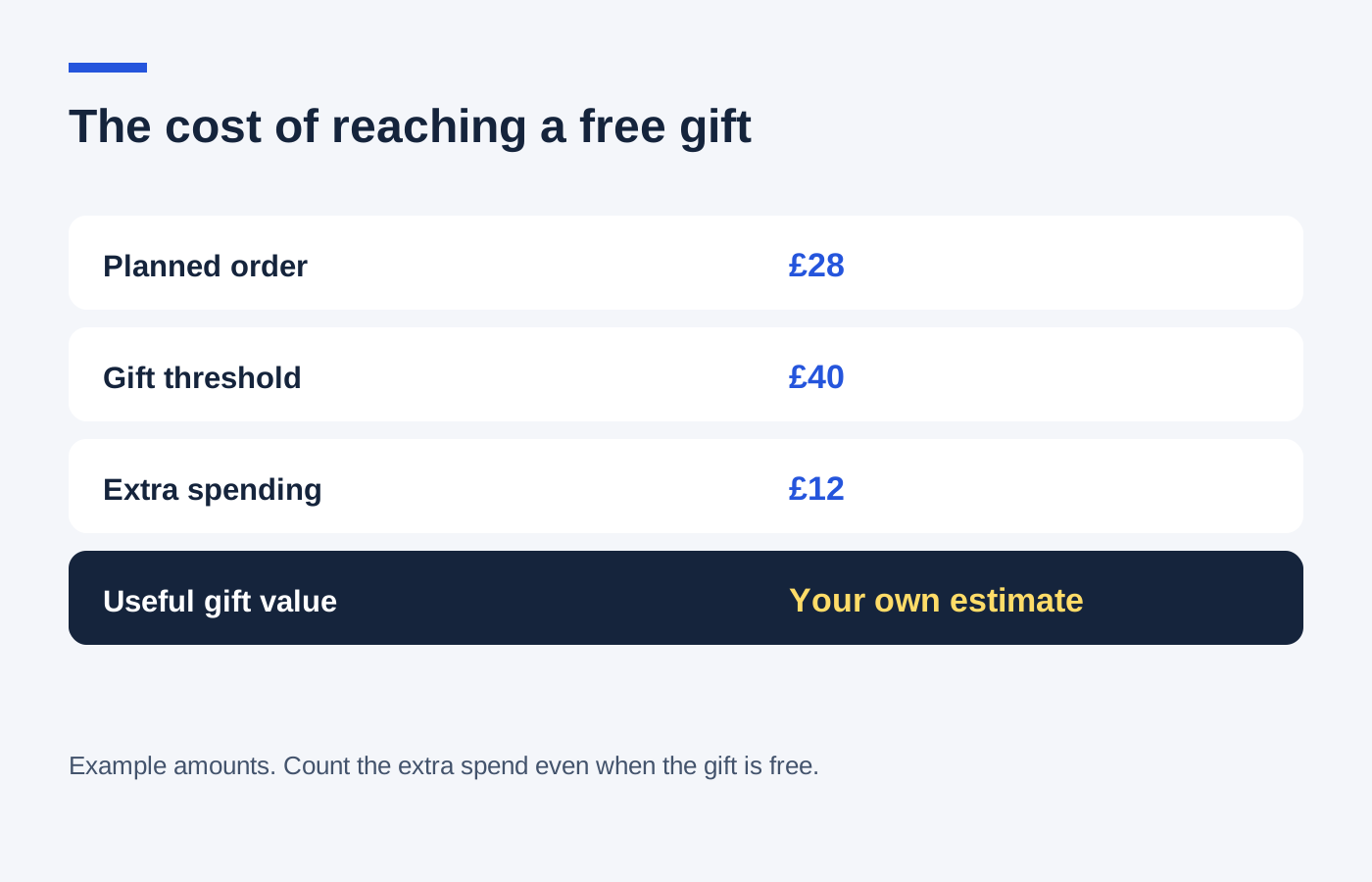
Do not use a headline value as a budget increase. A gift described as worth £30 does not make it sensible to spend £30 more on qualifying goods. The relevant question is what you would willingly pay for that gift in addition to the order you already wanted.
Calculate the extra outlay
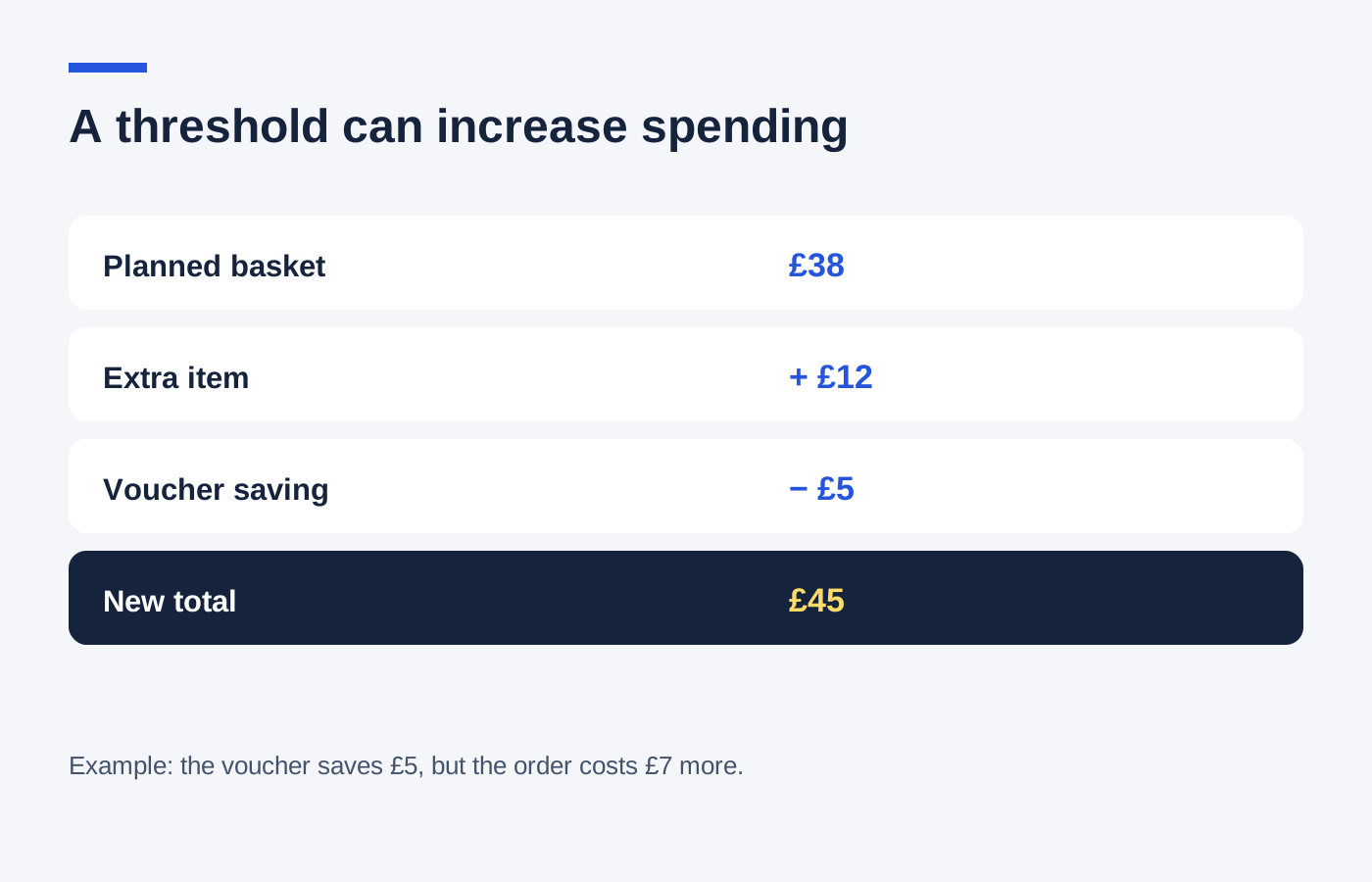
Imagine a fictional gift available with £60 of eligible purchases. Your intended basket is £47 and a useful extra item costs £15. You would spend £62 rather than £47, an increase of £15 before any delivery change. The gift and extra item together need to justify that additional outlay for you.
Check whether the threshold uses prices before or after discounts, and whether excluded brands contribute. Confirm that the gift is still available and appears in the order summary where the promotion says it should. A banner can remain visible even while a particular gift variation is unavailable.
Think beyond delivery day
Read the conditions for partial returns. If returning goods takes the kept order below the gift threshold, the retailer may ask for the gift back under the offer's terms. Keep it unopened until you know whether the main purchase will be kept, particularly when it is sealed for hygiene reasons.
Consider storage and duplication too. Another pouch, mug or travel bottle is only useful if it has a place in your routine. If it is intended for someone else, check that it is suitable rather than treating any free item as a ready-made present.
Choose the basket because its paid contents and final price make sense. A gift can improve that purchase, but it should not disguise how much extra cash you are committing to get it.