Identify what is actually ending
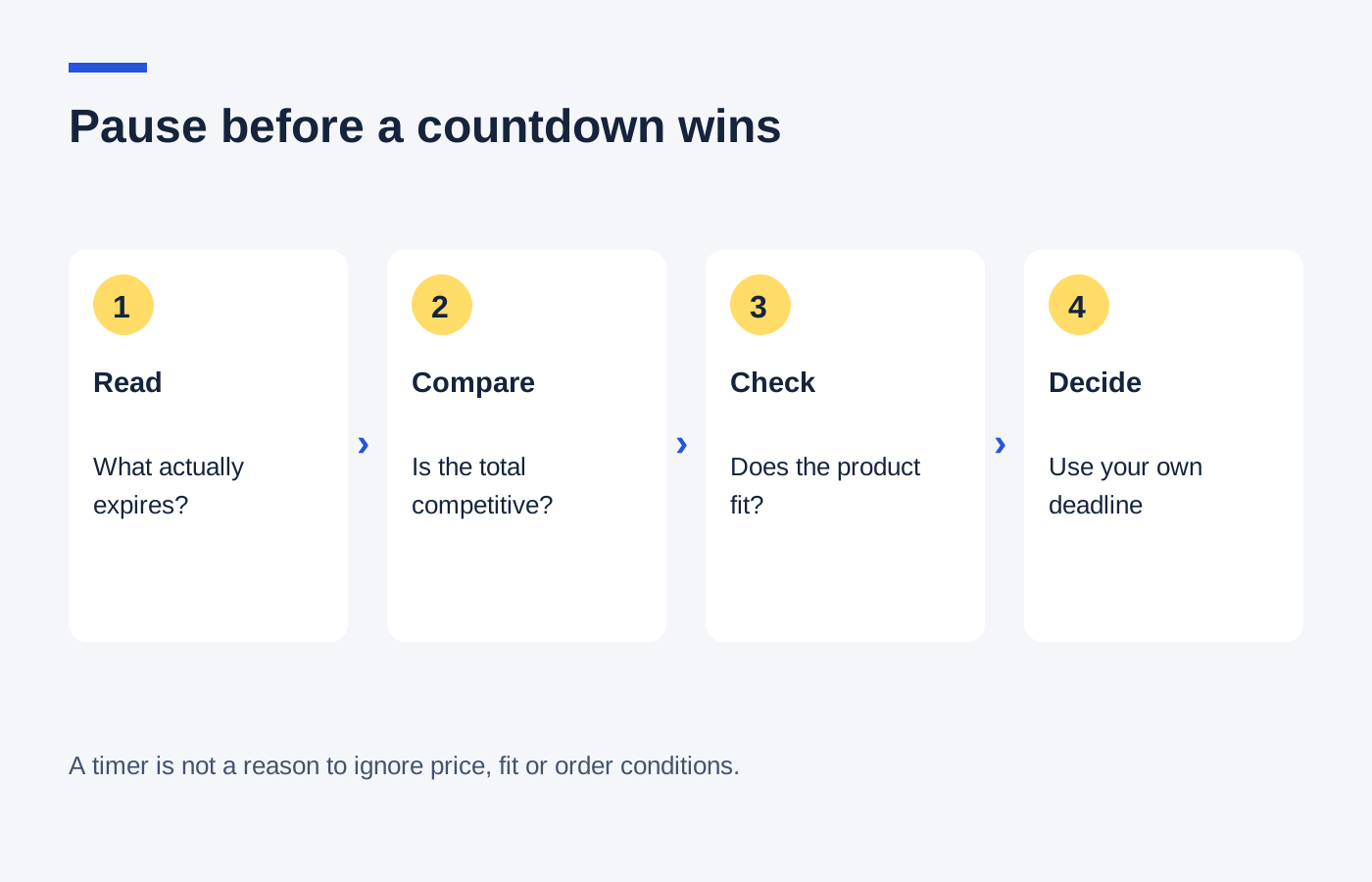
The clock might refer to a sale, a delivery cut-off, a reserved ticket or a checkout session. Read the accompanying words. An order deadline for next-day dispatch is different from a promise that the product price will rise when the clock reaches zero.
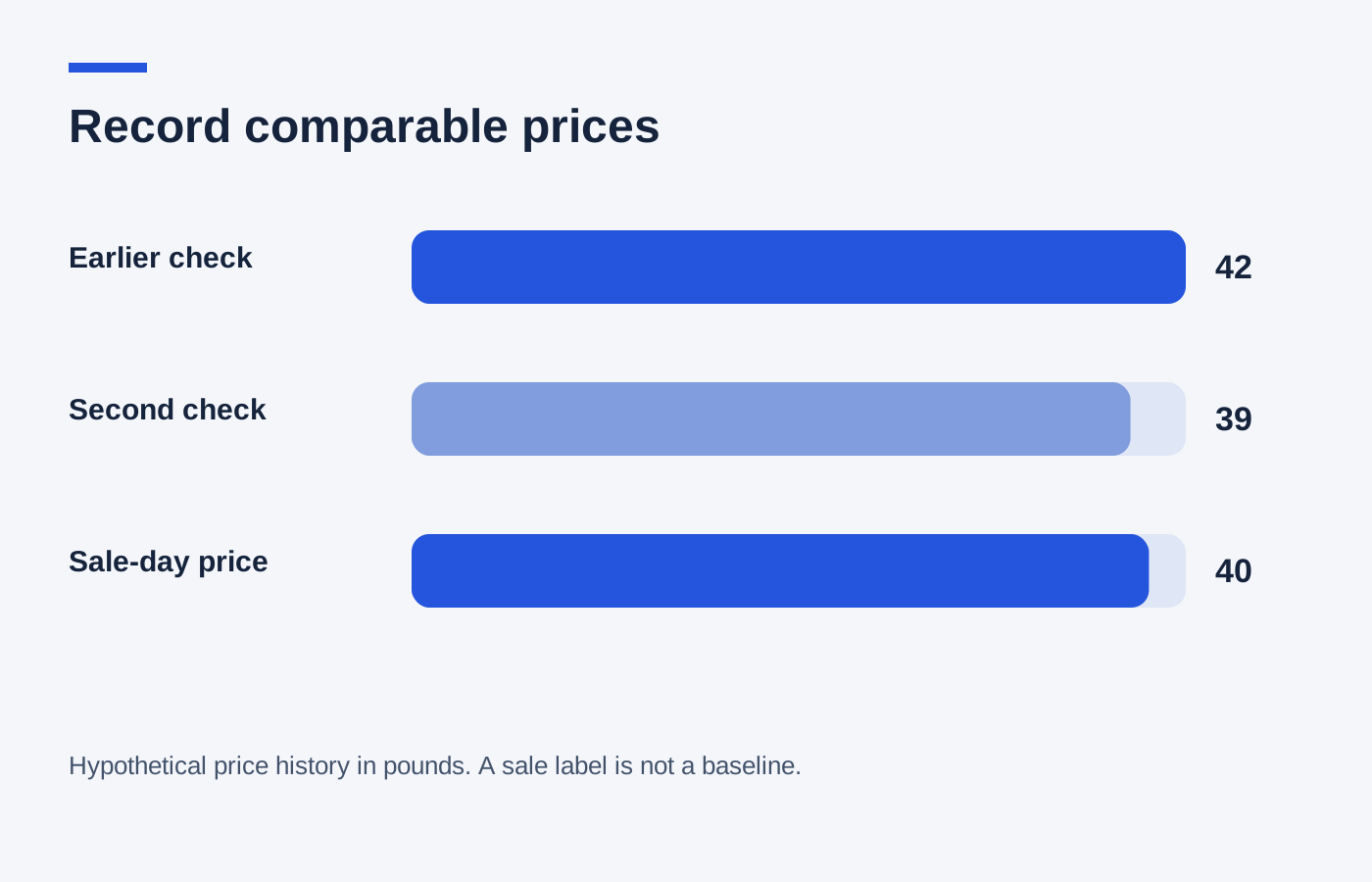
Look for a specific date and the terms behind the message. If a timer resets after refresh or the same sale continues after the stated deadline, that is a reason to question the urgency claim. The CMA has identified misleading countdown and checkout timers among problematic online selling practices.
Do the checks you would make without a clock
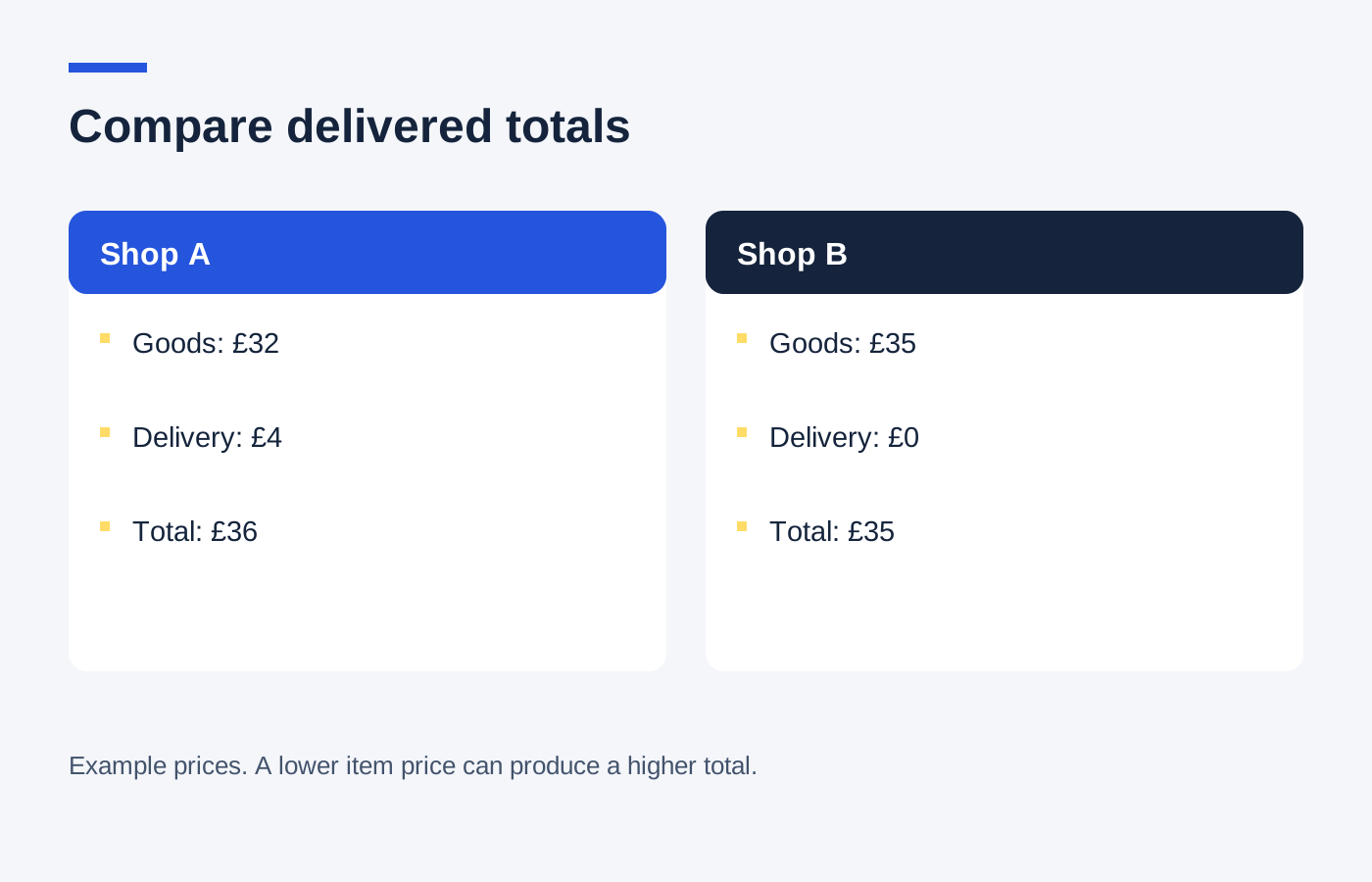
Confirm the specification, size, seller, delivery charge and return route. Compare the final total with a suitable alternative. If there is not enough time to answer an important question, the uncertainty belongs in the decision rather than being pushed aside by the countdown.
A hypothetical £80 purchase reduced by £8 still costs £72 before other charges. If it was not on your list or is above your budget, the timer has not changed those facts. A discount deadline should not become a spending deadline you did not previously have.
Choose a deliberate response
For an item already researched and budgeted, a genuine deadline can be useful scheduling information. For a new product you have only just discovered, close the basket and return when you can assess it. Missing an offer is an acceptable outcome.
Keep evidence if a specific urgency claim appears misleading and affected your purchase. Note the wording, date and what happened when the timer ended. Avoid assuming that every recurring promotion is unlawful; the exact representation and circumstances matter.
A personal review deadline is often more useful than the retailer's clock. Decide when you need the item and when you will make the choice. That keeps timing attached to your own plans instead of to a display designed to attract immediate action.