Convert to one common unit
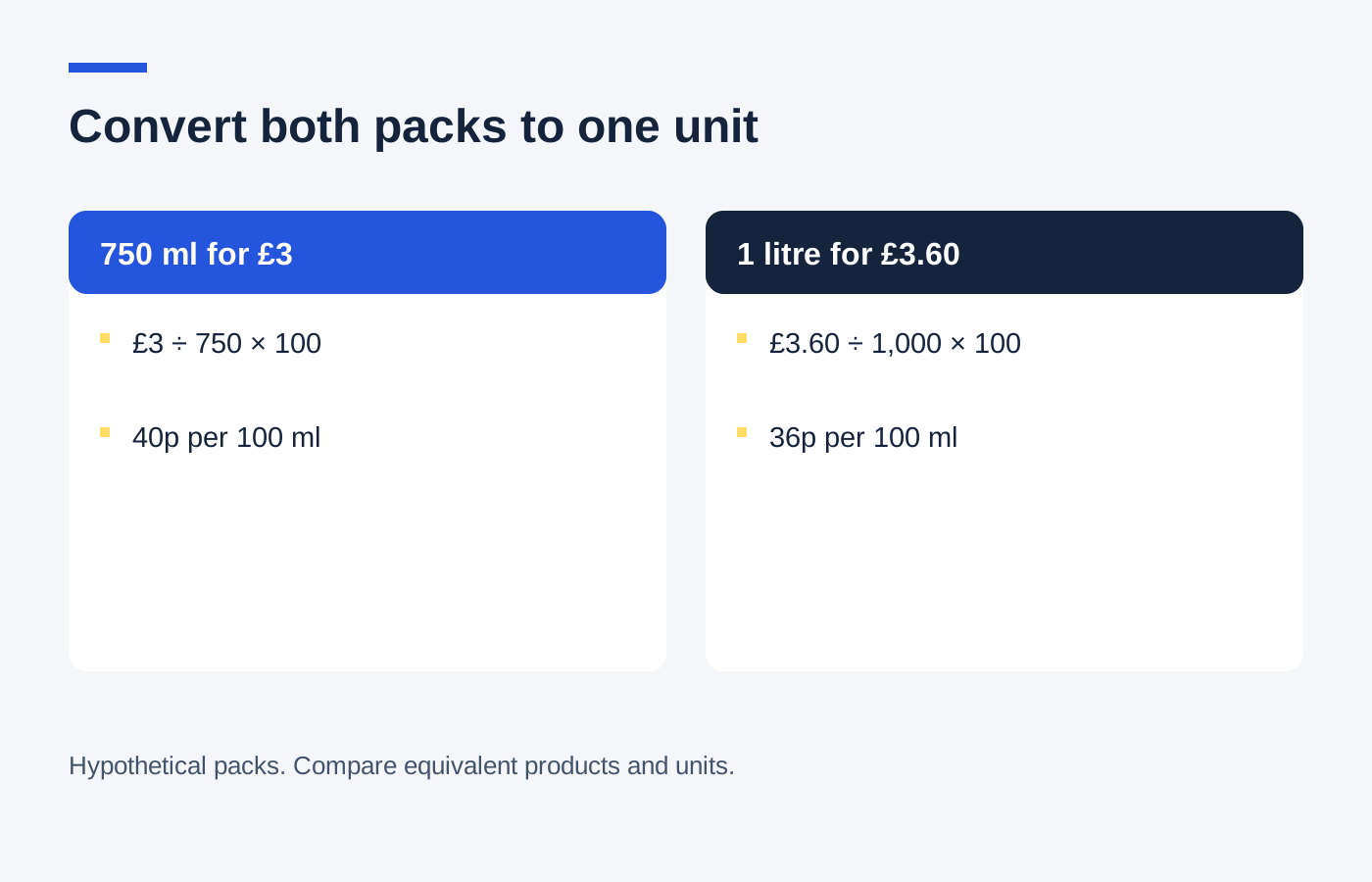
For a hypothetical 750g pack costing £3.60, divide £3.60 by 0.75kg to get £4.80 per kilogram. A 1.2kg pack at £5.40 costs £4.50 per kilogram. The larger pack is cheaper by weight in this example, although it requires £1.80 more at the till.
You could instead compare per 100g: 48p against 45p. Either unit works as long as both prices use it. Do not compare a per-kilogram label directly with a per-100g label without converting. The CMA's unit-pricing guide explains how weight, volume and item counts can help compare supermarket products.
Use the price you qualify for
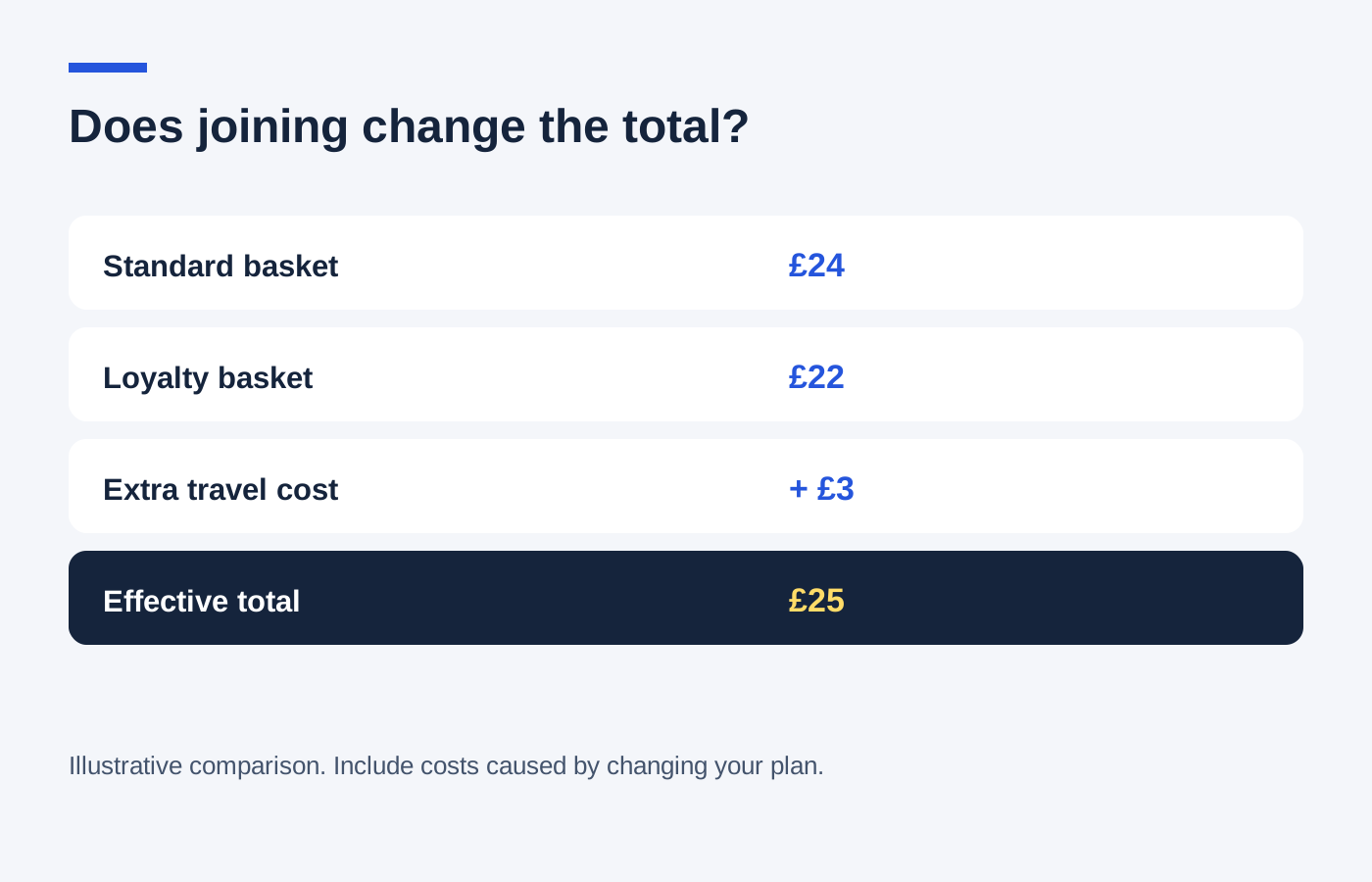
If the shelf shows a member price and a regular price, calculate from the one you can actually obtain. For a multi-buy, divide the total promotional cost by the combined quantity. If you need to buy three packs to reach that price, keep the three-pack outlay visible as well.
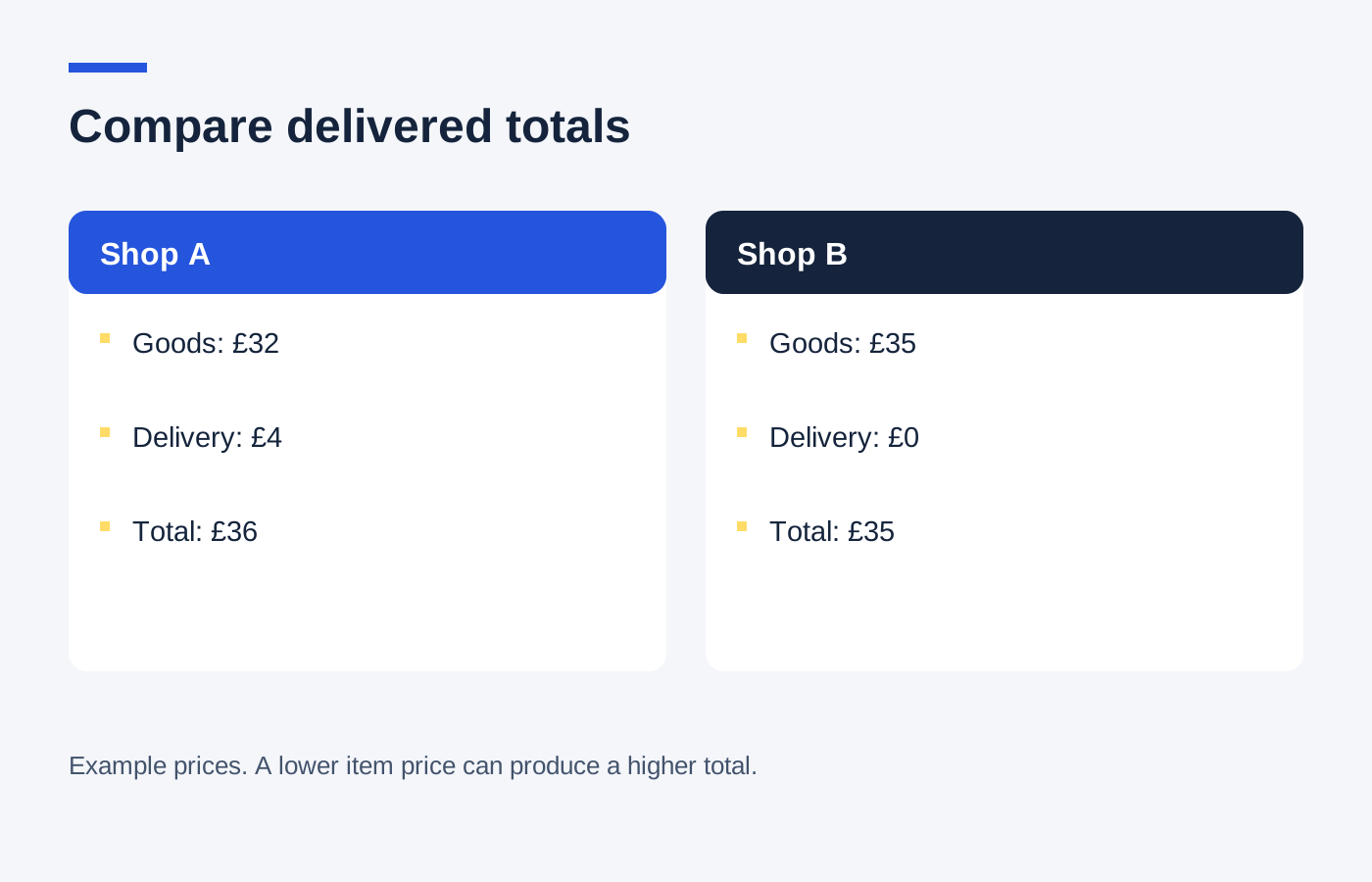
A percentage voucher may apply only to some products or may have a maximum saving. Use the confirmed discounted amount instead of applying the headline rate to every option. Delivery should be added when comparing complete online orders, especially if one option needs a separate purchase.
Check usefulness as well as arithmetic
Products with different concentration, dosage or preparation instructions may need a comparison per use instead of per litre. A smaller concentrated cleaner is not necessarily expensive just because its bottle contains less liquid. Follow the stated dose and do not improvise a stronger mixture to chase a saving.
Consider storage and how much you will use before quality deteriorates. If part of a larger food pack is wasted, its theoretical unit advantage may disappear. Smaller packaging can be sensible where it prevents waste or fits the available cash budget.
Keep both figures in view: the unit price tells you about quantity value, while the total tells you what you must spend. A good comparison uses both rather than allowing one to hide the other.