Follow the conditions through to payment
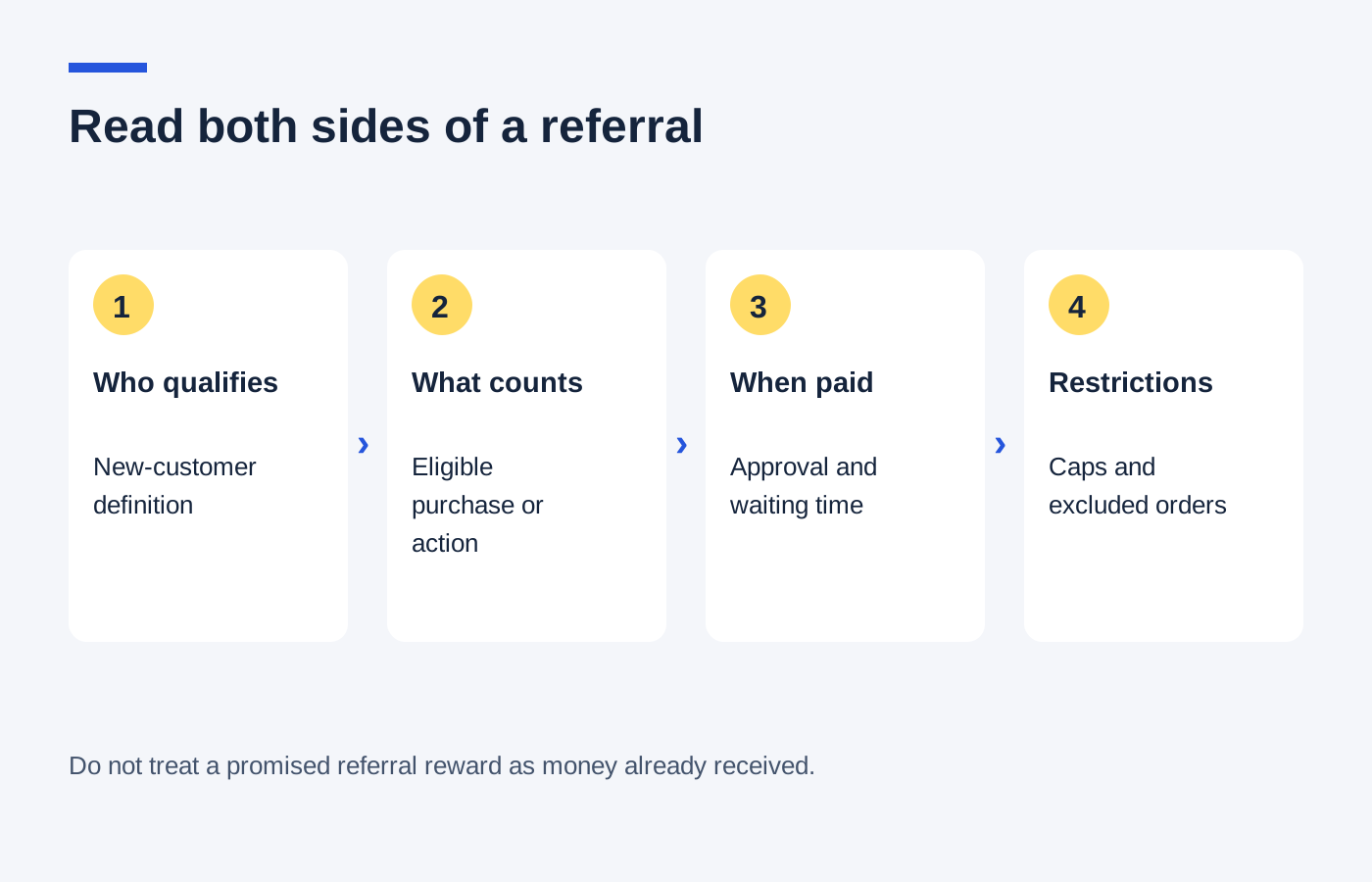
Look for the qualifying action: registration, a first paid order, a minimum spend or a purchase that remains completed after a return period. Joining alone may not earn the reward. Check whether previous customers are excluded and whether the referral link must be used before creating the account.
The reward itself may be cash, store credit, points or a voucher for a later purchase. A £10 voucher requiring a future £50 order is different from £10 removed today. Note expiry dates and restrictions on using the reward with other offers.
Compare the new customer's actual deal
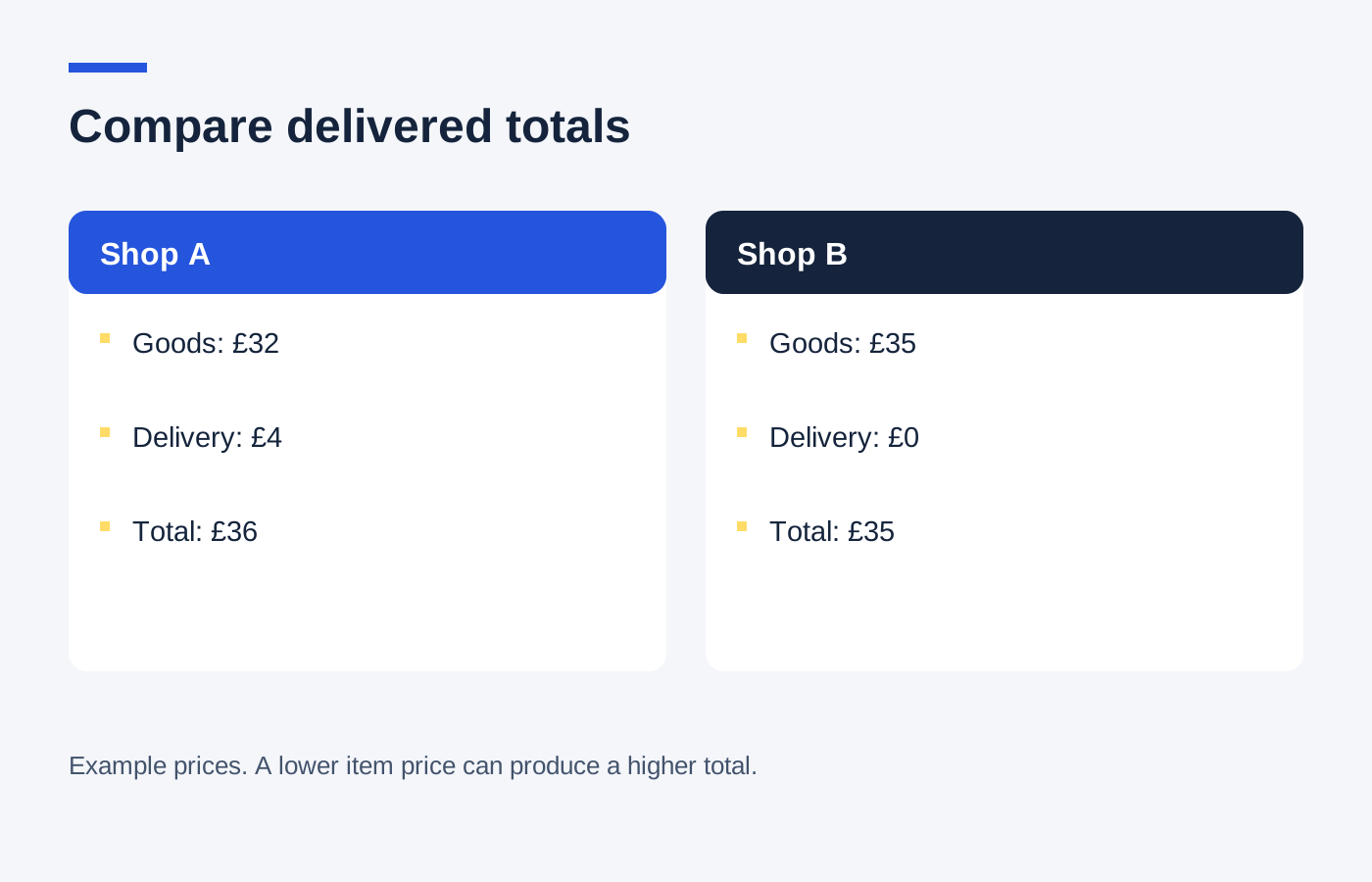
In a hypothetical offer, a new customer pays £45 and later receives £5 store credit. Another shop sells the same product for £42 delivered. The referral route costs £3 more now, and its credit is useful only if a future purchase fits. It should not be described as a guaranteed £40 purchase.
If you are the person sharing a link, explain any benefit you may receive so the recipient understands the arrangement. Let them make their own comparison rather than implying the referral is automatically their lowest-cost option.
Check limits without trying to work around them
Schemes may restrict self-referrals, shared households, duplicate accounts or public distribution. Read those limits before sending the link widely. Using another person's details to create an appearance of eligibility can cause the reward to be rejected and creates unnecessary account problems.
Keep the original referral terms and the confirmation of the qualifying order. If a reward does not appear, use the provider's stated support process and deadline. Avoid sending personal information about the other participant unless the provider needs it through an appropriate channel.
Choose the underlying product because it suits the recipient's needs and budget. A referral is a purchase incentive, not a reason to recommend something unsuitable or to open an account that will otherwise go unused.