Match the product line by line
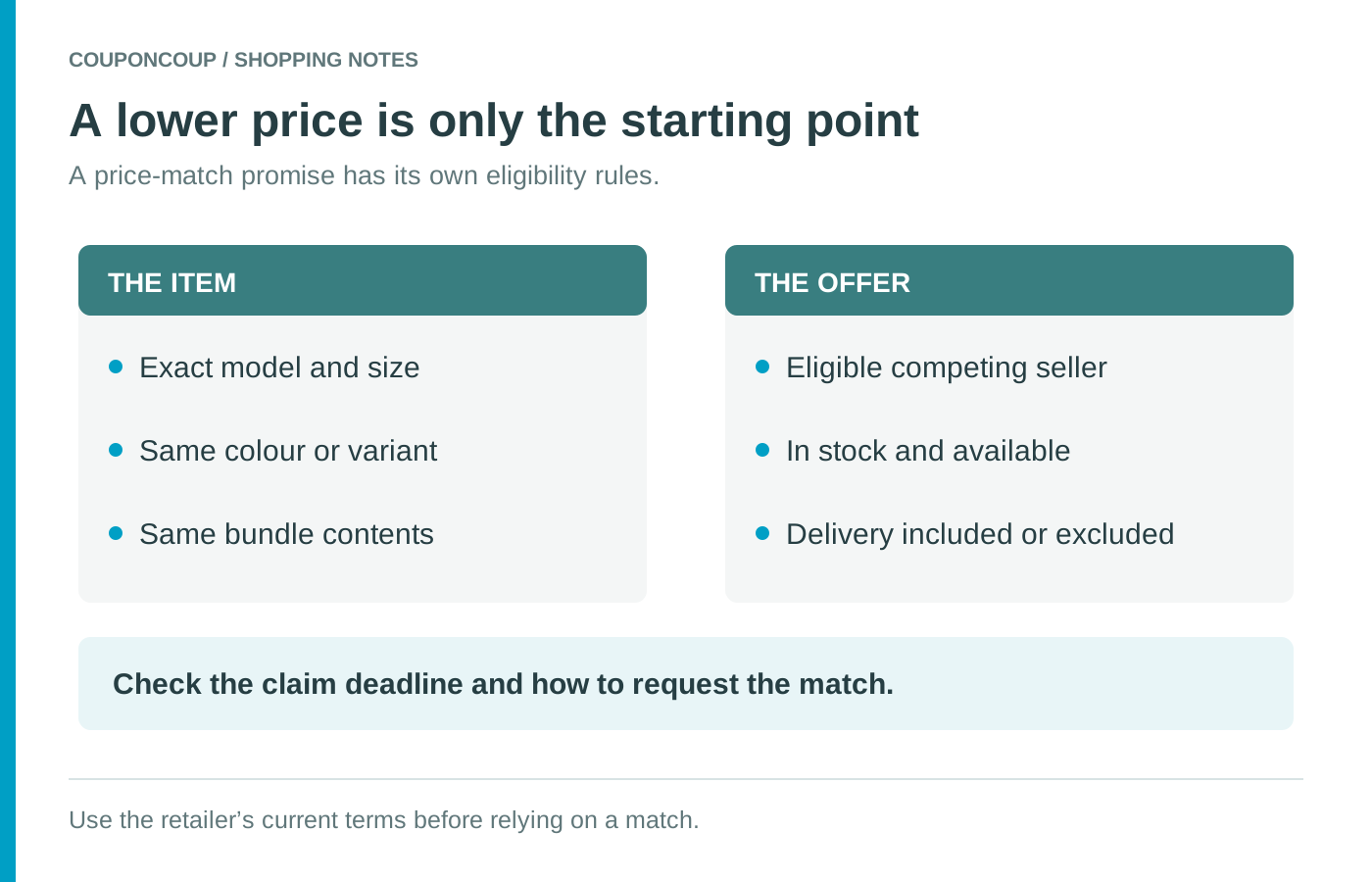
Open both product pages together and compare the manufacturer's model number, not just the name above the photograph. Check the size, colour, storage capacity where relevant, supplied accessories and version. Two vacuum cleaners in the same range might include different tools; two cookware sets might contain a different mixture of pans.
Record who actually sells the cheaper item. A familiar retail website may host products from other businesses, and a price promise may exclude those sellers. Also check that the exact version can be ordered for delivery to your address. A low price on an unavailable colour is not evidence that your chosen version is currently cheaper.
Find the boundary of the promise
Read the retailer's own terms for the eligible competitors, product condition and types of reduction. Look specifically for member prices, app offers, voucher codes, clearance stock and bundles. The right question is whether this particular offer qualifies, rather than whether the retailer normally matches prices.
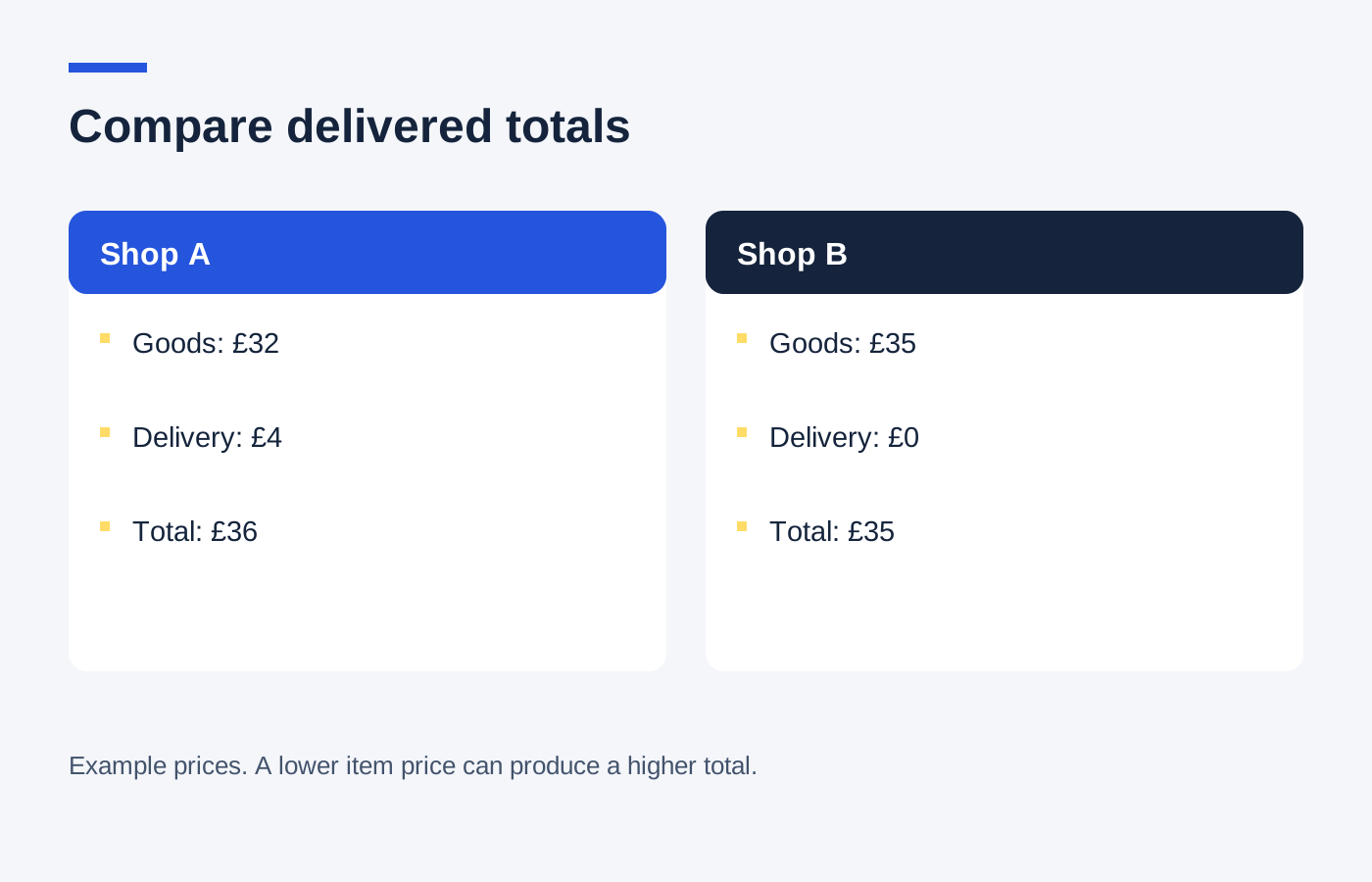
Delivery can change the comparison. Suppose, purely as an illustration, one shop lists an item at £70 with £6 delivery and another charges £74 delivered. The first headline is lower but its delivered cost is higher. Check how the promise treats mandatory charges, and calculate both totals for the delivery service you actually need.
For an example of how detailed the conditions can be, John Lewis publishes a price-promise page defining eligible items and sellers. Use the current terms of the shop you are considering: another retailer's policy does not establish what your chosen shop will accept.
Separate a request from an approved adjustment
Look for the point at which the lower price is applied. You might need approval before placing the order, or you might have to pay the displayed amount and request a refund afterwards. A submitted form or acknowledgement is not the same as confirmation that the price has been adjusted.
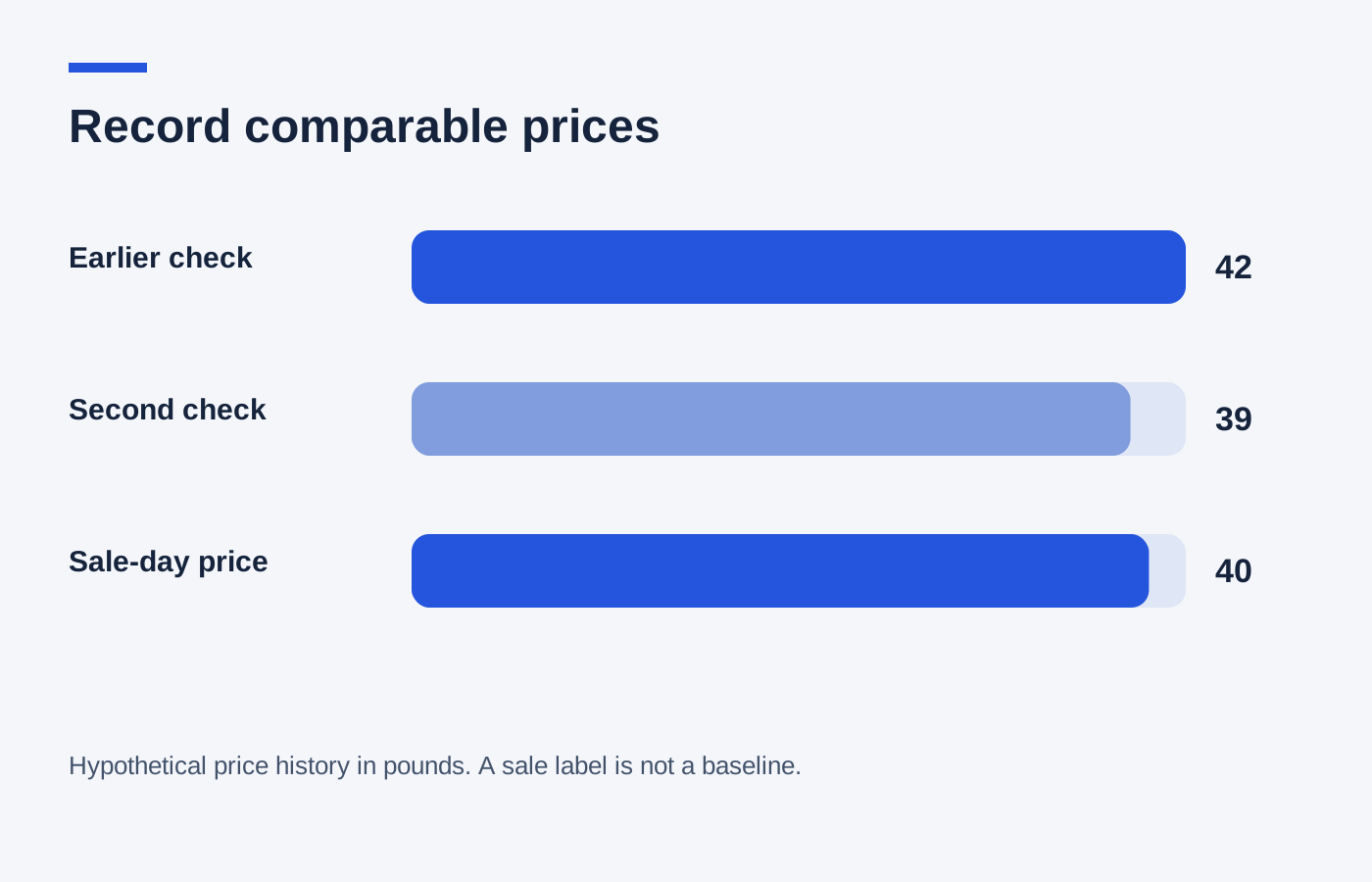
Save the competing product link, the visible price, availability and any mandatory charge, along with the date you checked them. A screenshot can help explain the request, but the retailer may still need to verify a live offer. Keep the order number and the response together rather than relying on a browser tab that may change.
If the process requires you to buy first, ask whether you are comfortable with the higher total. Do not commit money you cannot spare on the assumption that an uncertain refund will arrive. Check any claim deadline in advance and set a reminder that leaves time to supply missing information.
Keep the rest of the order in view
A matched price does not make the delivery date, collection location or return arrangements identical. Compare those details as part of your choice. It can be sensible to use a familiar shop, but the price promise alone does not establish that it is the most convenient option.
Before accepting a match, check whether it changes another discount on the basket. A lower individual price and a whole-order voucher may not combine. Compare the final amount payable after the approved adjustment, rather than adding two savings that the checkout never allows together.
Once the request is resolved, keep the confirmation with the receipt. That gives you a clear record of what you paid and avoids mistaking the original payment for the final cost when you later compare purchases or check a refund.