Choose a few products worth tracking
Start with items you buy regularly and whose prices vary enough to matter. Laundry products, coffee or household paper can be useful candidates. There is little benefit in maintaining a detailed history for an occasional item you are unlikely to buy again.
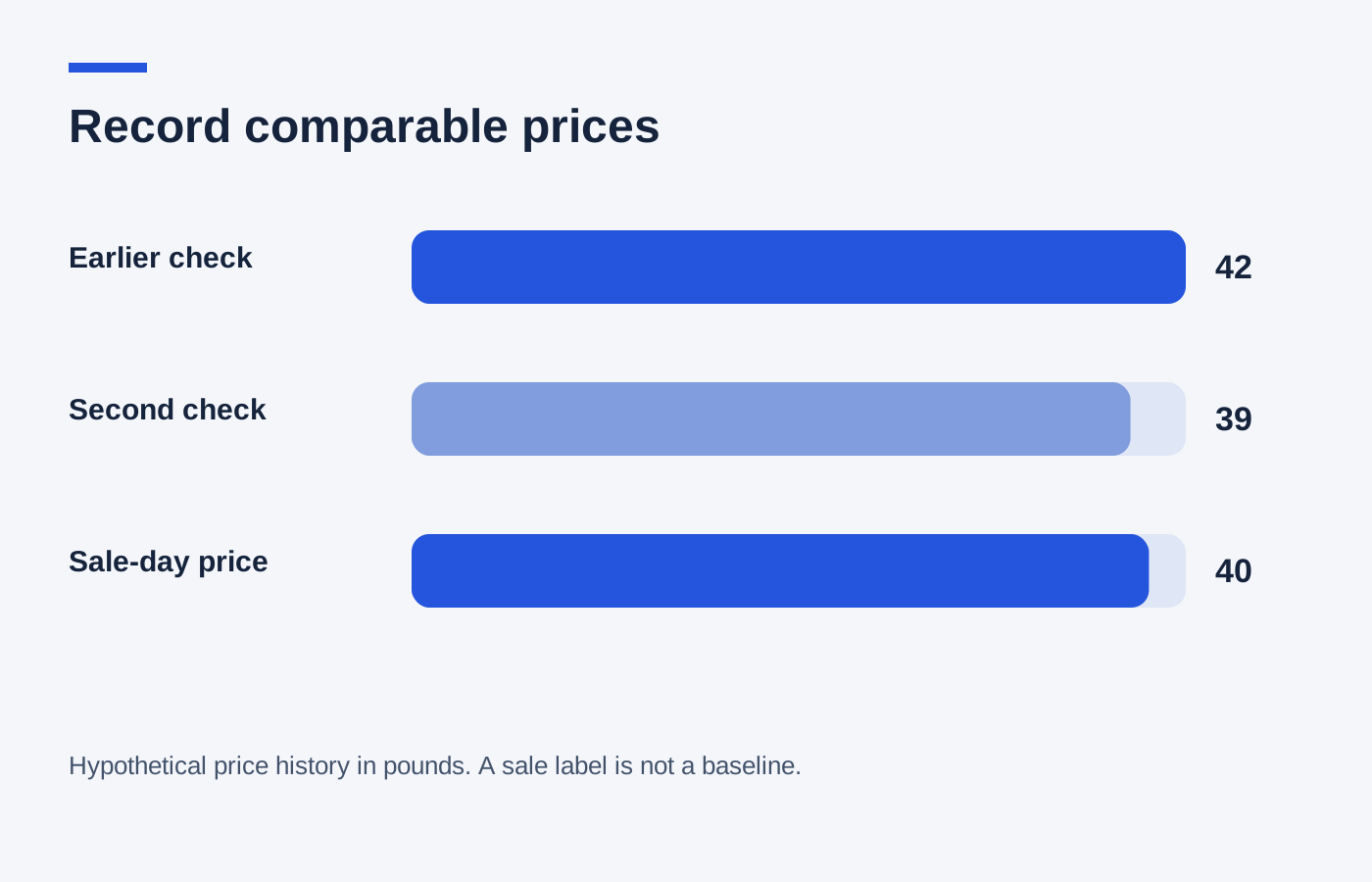
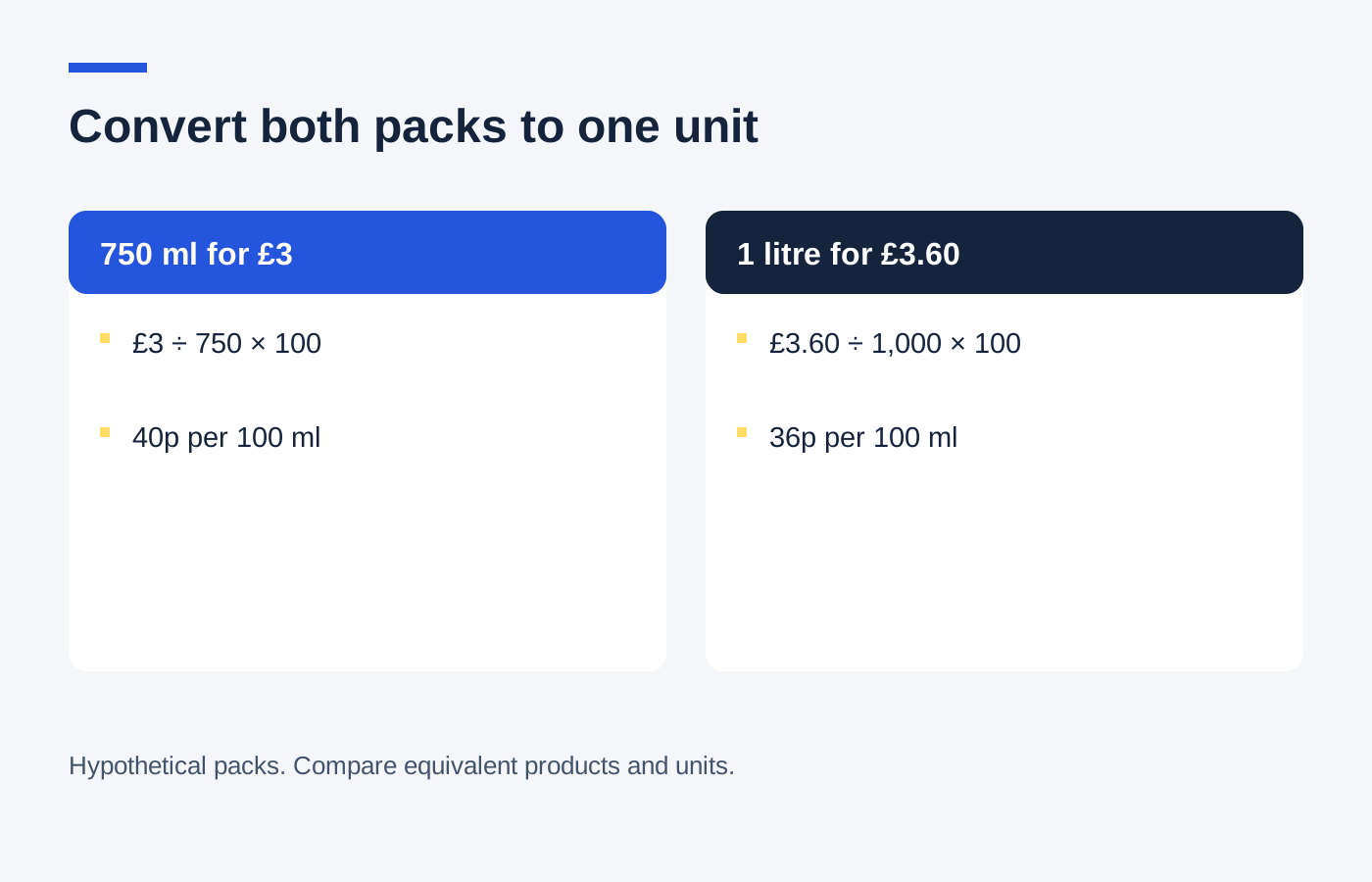
Record the date, retailer, exact quantity, price paid and any membership or multi-buy condition. Add a unit price where it makes comparison easier. A note saying only “£5 on offer” becomes unhelpful when the next pack contains a different number of items.
Keep the figures comparable
If a fictional 900g pack costs £6.30, its unit price is £7 per kilogram. A later 800g pack at £6 costs £7.50 per kilogram. The second price is lower per pack but higher for the same amount, which is exactly the sort of change a basic record can reveal.
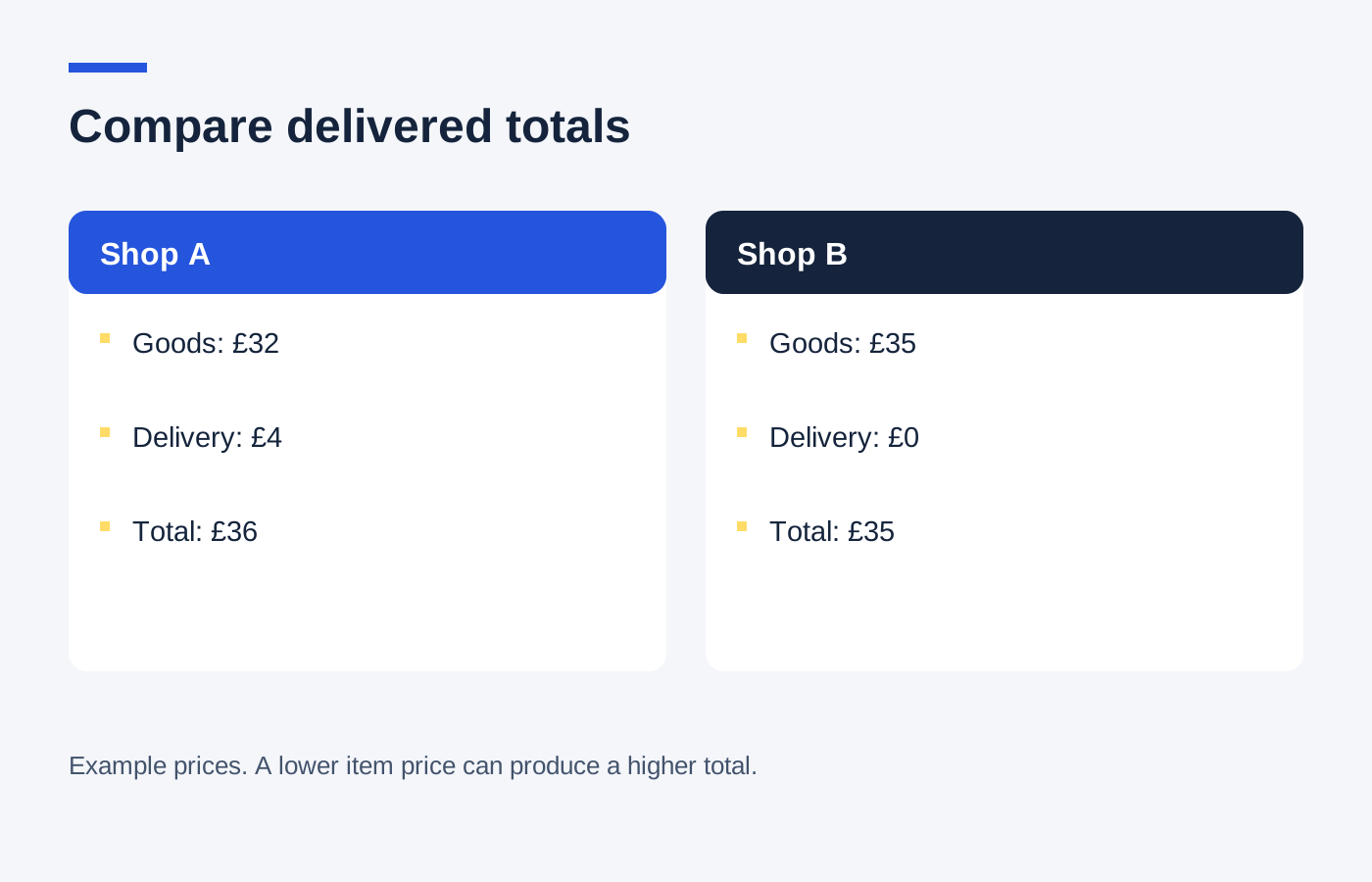
Separate product price from order-level delivery when needed. If the delivery charge covers a whole grocery shop, assigning all of it to one tracked item would distort the record. Note the order context rather than forcing an arbitrary allocation.
Use the record as a prompt, not a command
A price below your recent range can prompt a check of cupboard space and upcoming use. It should not automatically trigger a bulk order. Confirm the product has not changed and that you can use the quantity before quality or usefulness declines.
Remove entries for products you no longer buy, and mark old prices as historical. A record from several years ago may explain a trend but is not necessarily a realistic target today. Recent comparisons with suitable alternatives are more useful for the next purchase.
Keep the process quick enough that you will maintain it. A phone note or a few spreadsheet columns are sufficient. The aim is to recognise a useful offer and avoid misleading pack comparisons, not to account for every penny of every shopping trip.