Start with the deadline for using it
A working replacement for something worn out is different from an optional upgrade. Note when the product is needed and allow time for delivery, setup and a possible exchange. The latest safe order date may arrive well before the event or first use.
If you can continue using what you already own, waiting has little direct cost. If delay means paying for a temporary product or repeated service, include that expense. A future £10 reduction does not help if waiting creates £15 of unavoidable interim spending.
Set a price and a review date
Record the current delivered price for the exact item, along with one or two realistic alternatives. Choose a price at which you would be comfortable buying and a date to review the choice. This is more useful than checking several times a day without a decision rule.
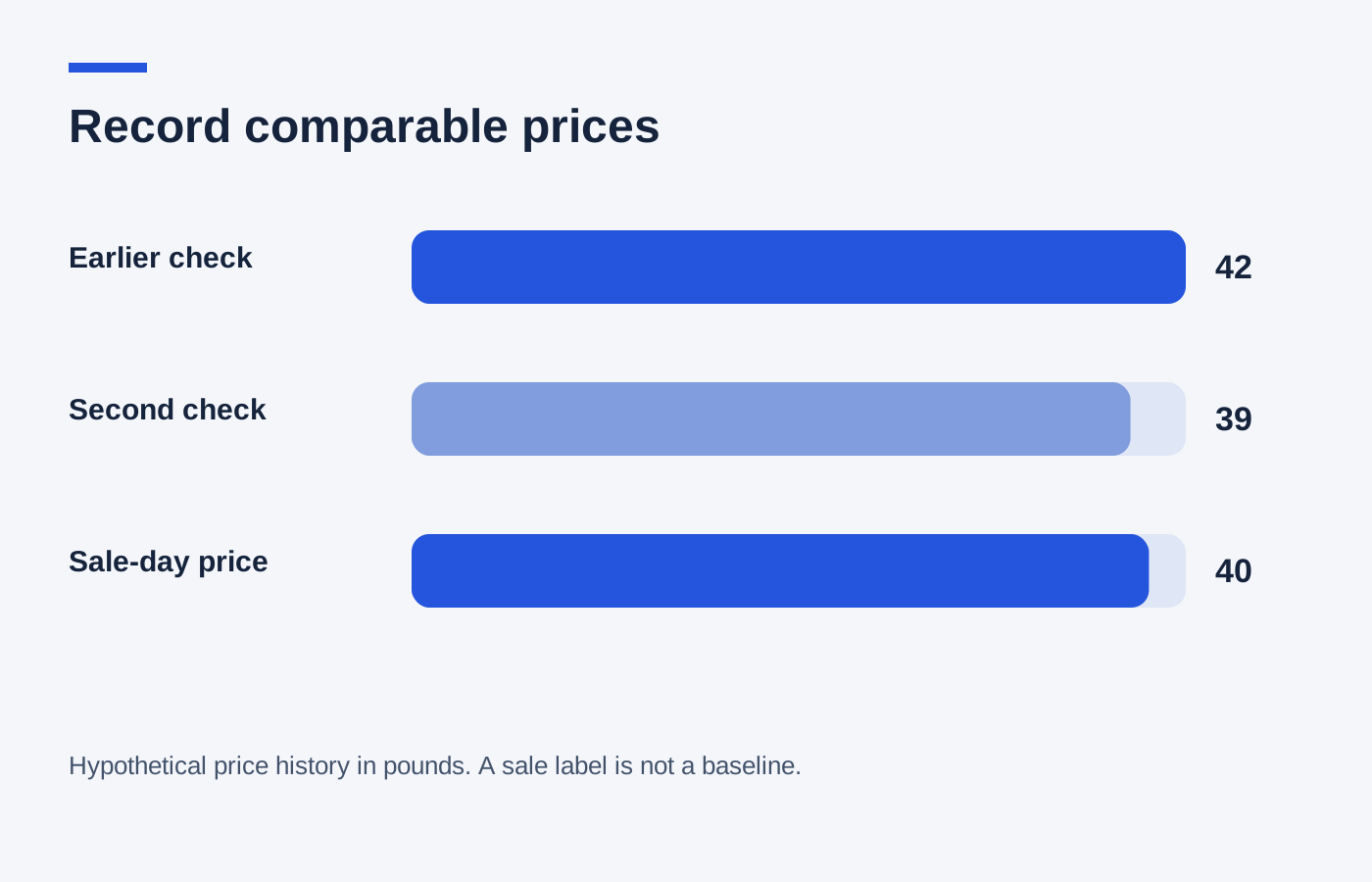
Seasonal promotions may offer opportunities, but no particular reduction is guaranteed. Avoid treating last year's sale price as a promise for this year's stock. Changes in model, quantity and availability can make historical comparisons imperfect.
Include the cost of compromise
A heavily reduced colour or size is not a bargain if it does not fit the intended use. Decide beforehand which alternatives are acceptable. If the preferred version sells out, compare those alternatives against the original requirements rather than buying whatever remains to justify the wait.
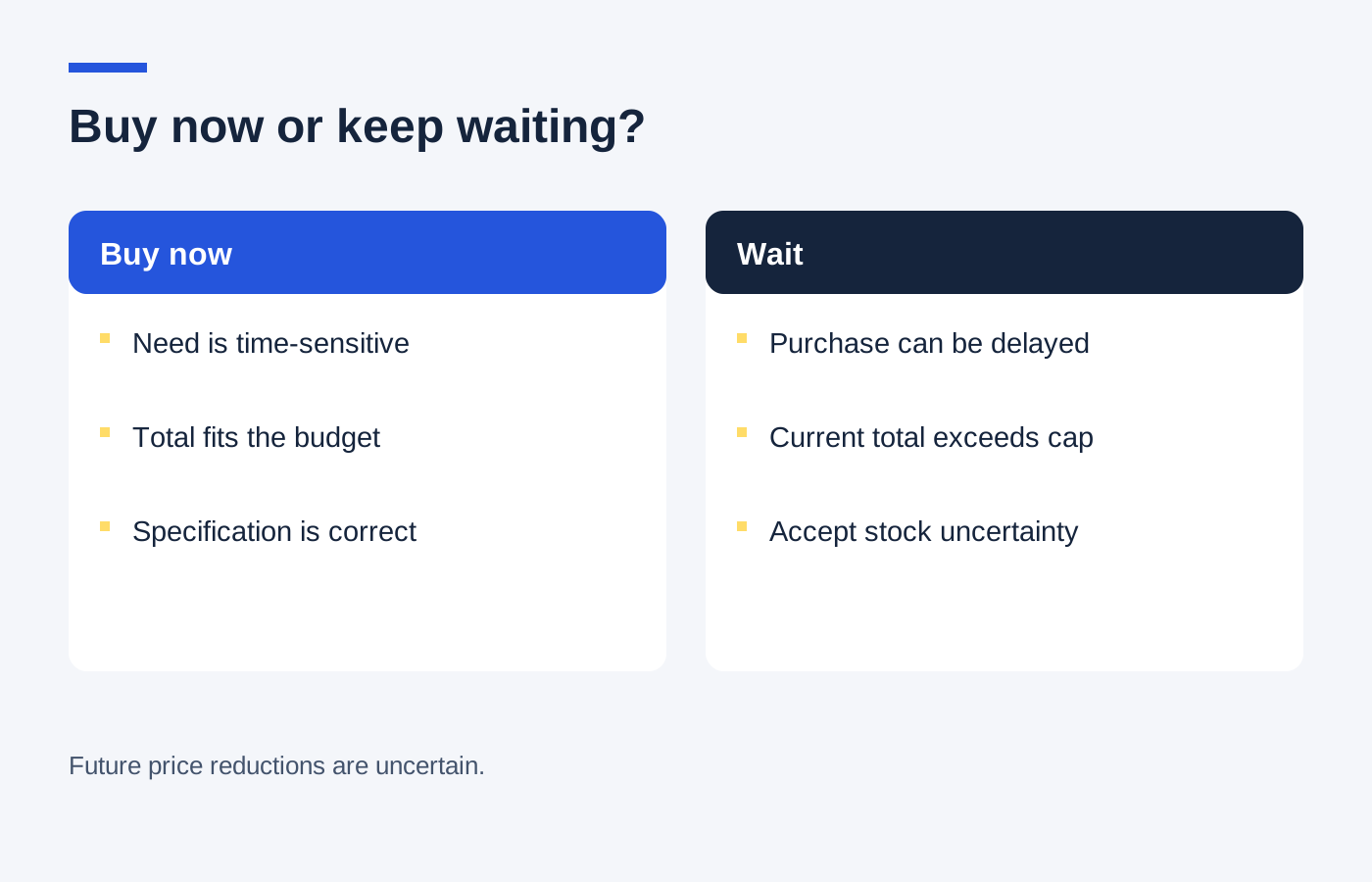
For a hypothetical £90 item, you might decide that a possible £5 reduction is not worth delaying a purchase needed next week. For a non-urgent £400 item with several equivalent alternatives, a longer comparison period could be sensible. The right choice comes from your timing and budget, not a universal rule to always wait.
When the review date arrives, make a fresh decision using current information. Buying at a fair, affordable price can be a successful outcome even if a cheaper offer appears later. The aim is to avoid a poor decision now, not to predict every future promotion perfectly.