Map the payment schedule
Find the introductory charge, the normal renewal price, delivery charges and billing frequency. Monthly, every four weeks and quarterly are different schedules. Check whether the offer requires a minimum number of deliveries or an upfront commitment, and note the date the next payment will be taken if you do nothing.
For a hypothetical example, a £5 first box followed by five boxes at £18 costs £95 before delivery over those six boxes. Adding £3 delivery per box brings the total to £113. That is a more useful planning figure than describing the subscription as a £5 purchase. Use the real terms for the service you are considering rather than treating these invented numbers as an offer.
If there are prepaid and rolling plans, compare both the total commitment and the flexibility. A lower average box price may require paying a larger sum in advance. Do not assume a pause button cancels the subscription or that cancelling future renewals automatically refunds a prepaid term; read the actual conditions.
Check whether the introductory code changes only the first payment or also adds a separate free item. A free gift can create the impression of a larger first box that later deliveries do not repeat. If the offer requires a particular subscription length, compare that exact plan with the normal plan you would otherwise choose, rather than assuming the cheapest introductory headline describes every available option.
Evaluate the contents without inflated value
Check whether the products are selected by you, selected from preferences or entirely a surprise. Look at the stated mix of full-size items, samples and accessories. Past boxes can show the style of the service, but they are not a guarantee that the same brands or quantities will appear in future deliveries.
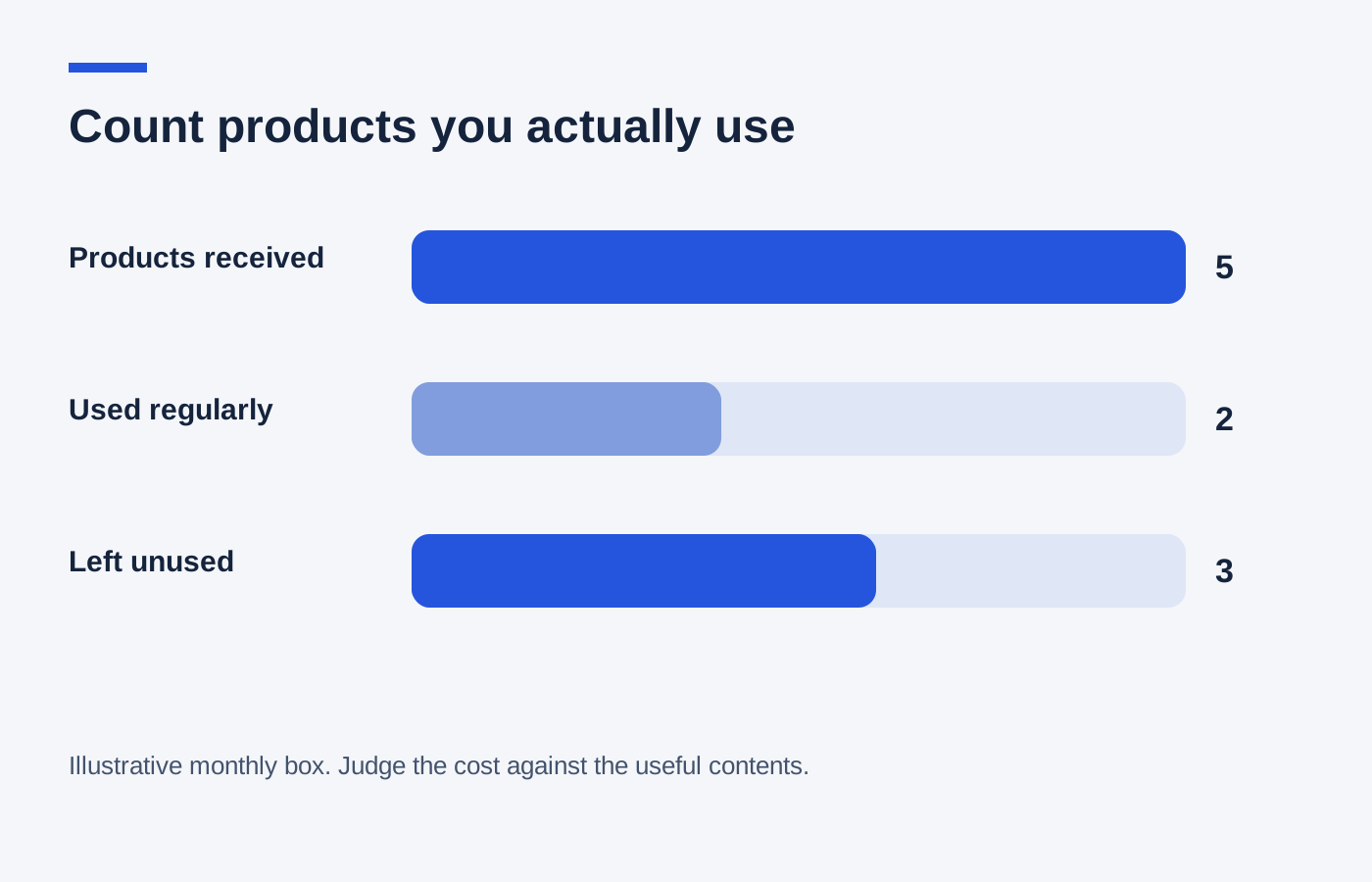
List what you already use and what you are willing to try. A box full of unfamiliar shades, fragrances or routines can create waste even when the stated retail value is high. If the subscription collects preference information, check how much that information actually changes the selection and whether particular categories can be excluded.
Separate enjoyment of discovery from replacement savings. It is reasonable to value trying new products, but that is discretionary spending. A box only replaces a planned purchase when it supplies a suitable product you would otherwise have bought. Counting every sample at its advertised equivalent value can make the saving look larger than it is.
Check use, storage and accumulation
Estimate whether the delivery frequency matches how quickly you finish cosmetics. Several boxes arriving before the previous products are used can leave a backlog. Follow each product's storage and use information, and avoid opening everything immediately if you do not plan to start using it.
For products where ingredients or suitability matter to you, check how that information is supplied before committing. Do not assume a general preference questionnaire guarantees that every item will be appropriate. A subscription is a poor match if it repeatedly delivers categories you cannot or do not want to use.
Make the exit process visible
Find the method and deadline for cancelling or changing a renewal, and save those terms with the confirmation. A reminder before the relevant deadline can help you review the service. Check how to contact support if the account controls do not work, and keep evidence of any change you request.
Review the subscription after an actual delivery by noting what you used, what remains unopened and whether it displaced any planned purchase. Compare that with the total paid, including postage. If the service mainly adds products to an already full shelf, a one-off purchase of a familiar item may fit your budget better. Keep renewing only while the recurring cost and contents continue to suit you.