Price the journey you would actually take
If the collection point is on a trip already planned, the extra cost may be small. If it requires a separate bus fare or paid parking, include that amount. Do not count the cost of an entire existing journey against collection, but do not ignore a new journey either.
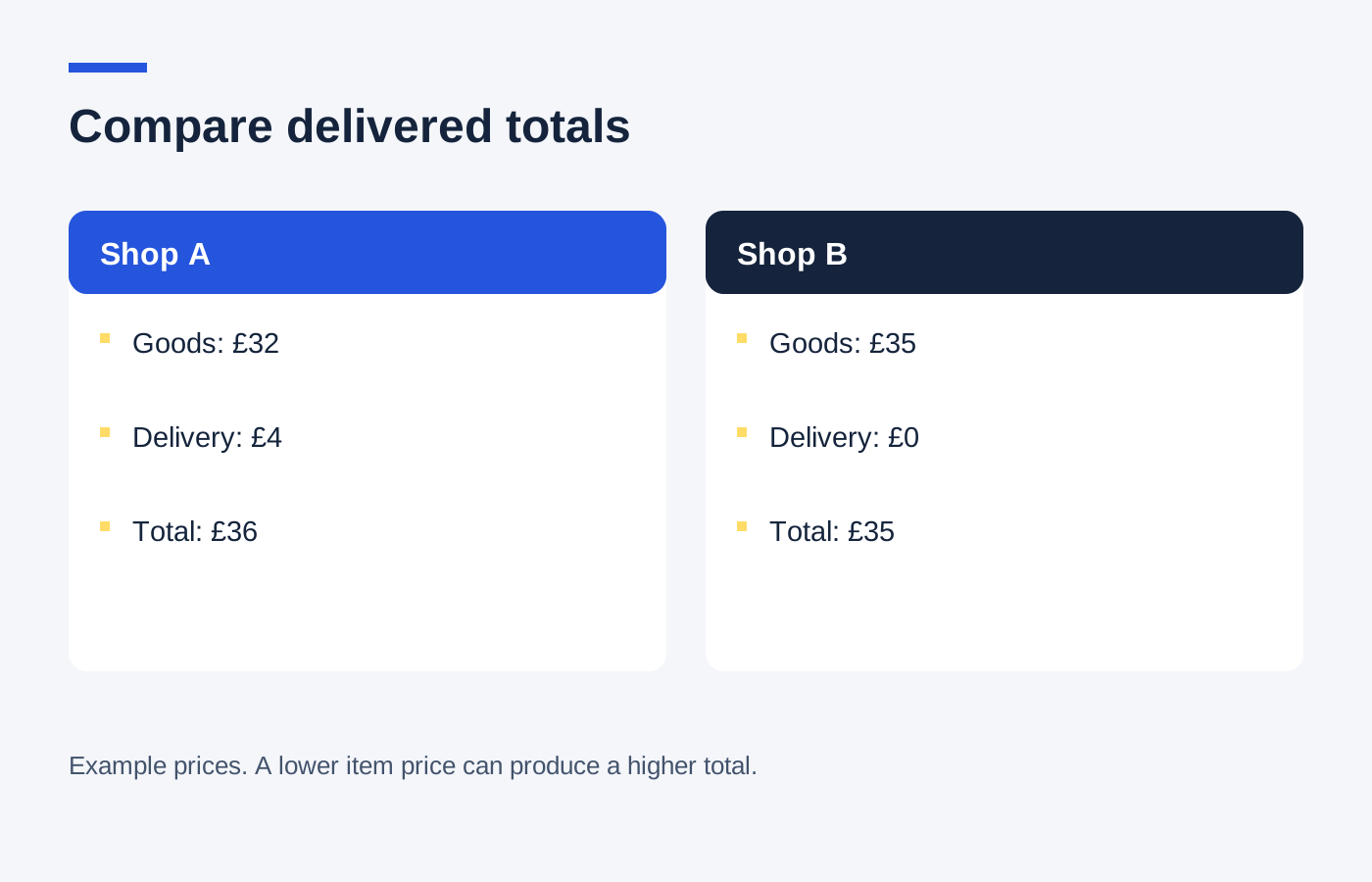
In a hypothetical comparison, home delivery costs £4.50 while collection is free. A separate £3 bus trip saves only £1.50 before considering your time. If collecting also requires £2 parking, it can be more expensive than delivery. Use the transport option that is genuinely available to you.
Check the timing and parcel
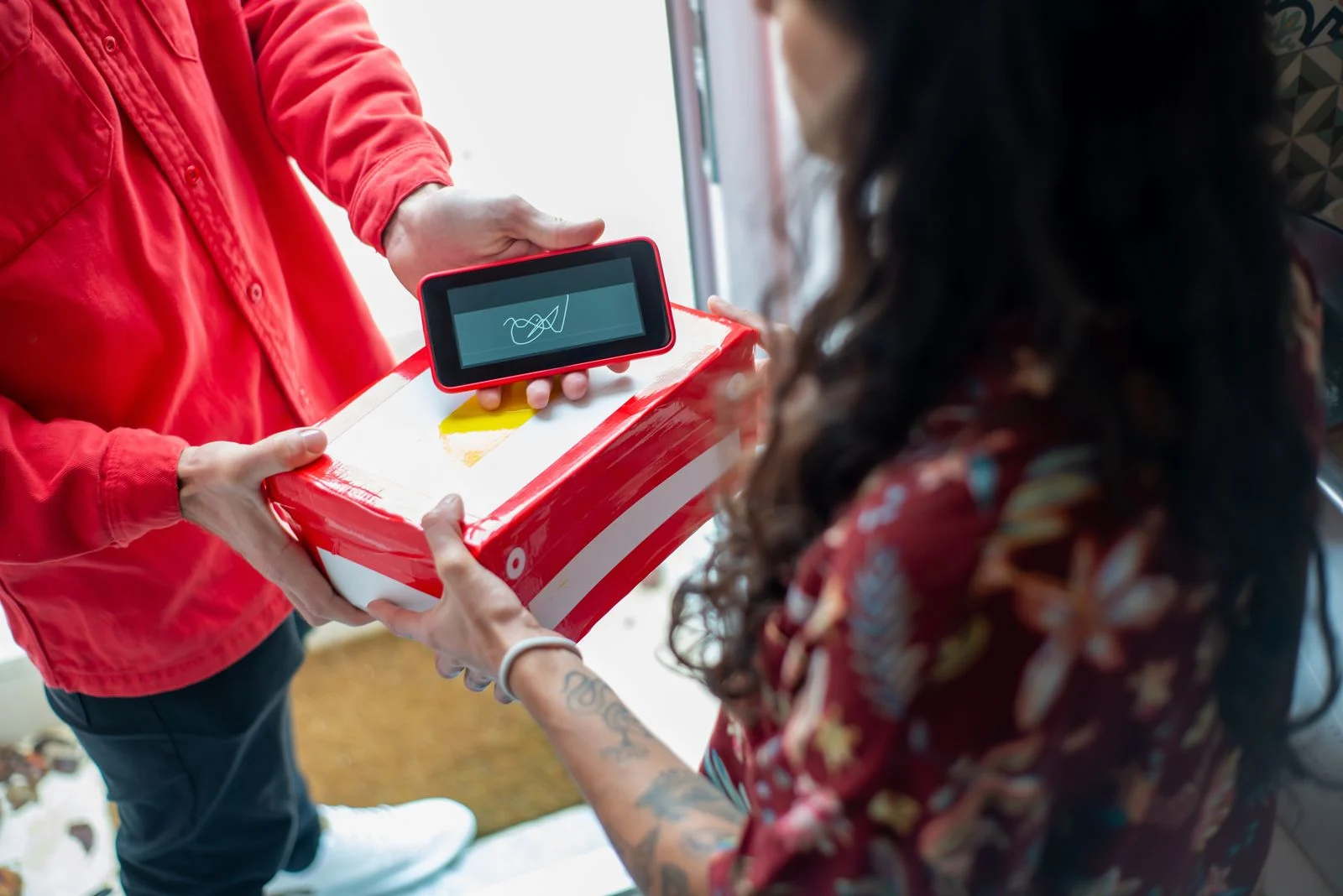
Look for the expected ready-to-collect date, opening hours and the period for which the order will be held. An order confirmation is not necessarily a collection notification. Wait for the message that says the goods are ready before travelling.
Check identification requirements and whether someone else can collect on your behalf. For a heavy or bulky item, confirm the package dimensions and how you will carry it. A collection point close to home is less convenient if the parcel cannot safely fit in your transport.
Compare the complete service
Home delivery may suit an item needed quickly if the available collection date is later. Conversely, collection can be easier when you cannot wait at home. Consider accessibility, opening hours and the reliability of your own schedule instead of valuing the services solely by price.
Read the returns information separately. Collecting from a shop does not always mean that every return can be handed back to the same counter. The arrangement may depend on whether the shop is the seller, a collection partner or simply a parcel point.
Before paying, confirm the selected branch or parcel location and the final charge. Nearby names can be confusing, particularly where a town has several stores. Save the collection notification with its deadline and order reference so the saving is not lost to an unnecessary second trip.