Build a comparison with two totals
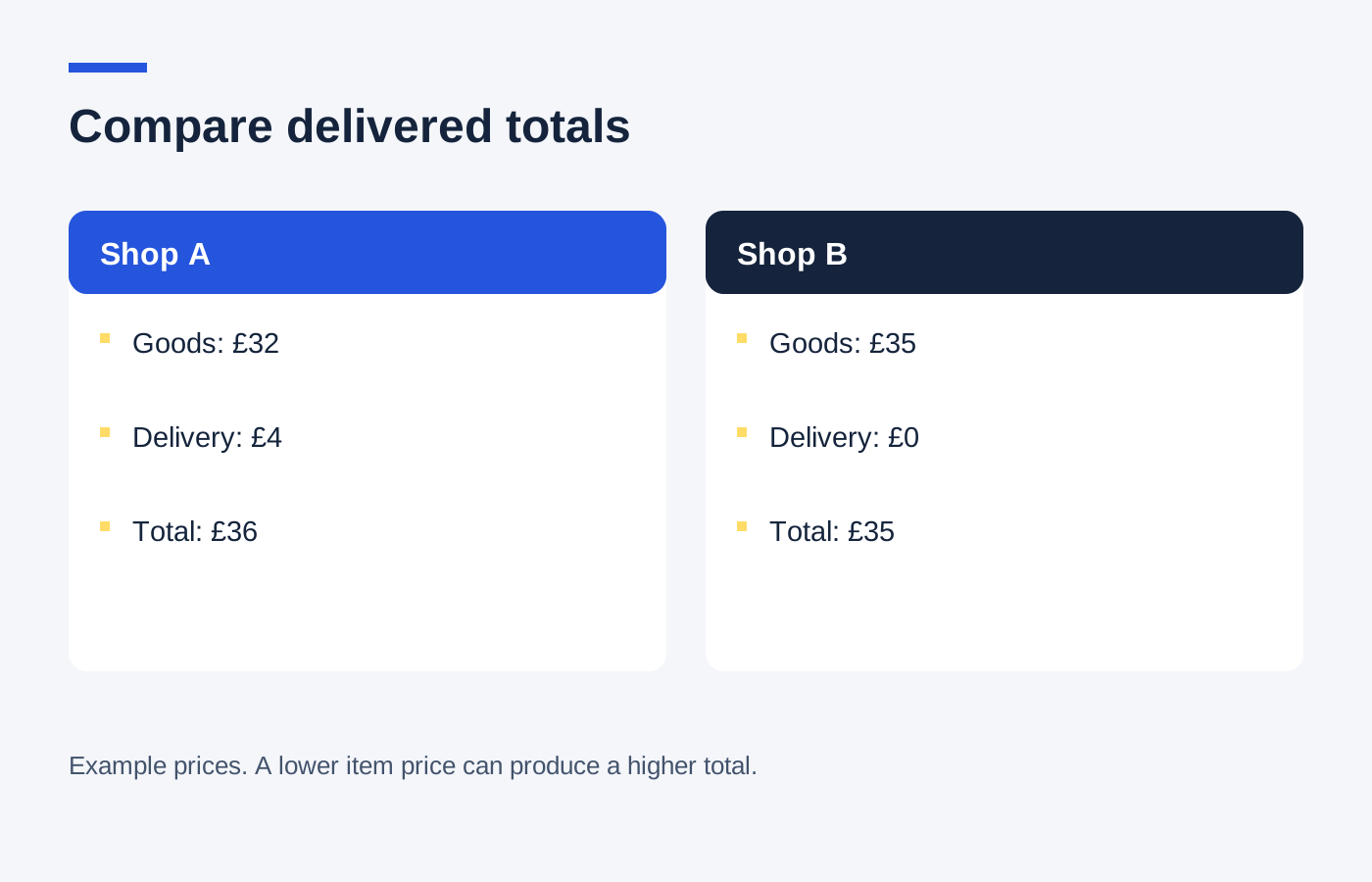
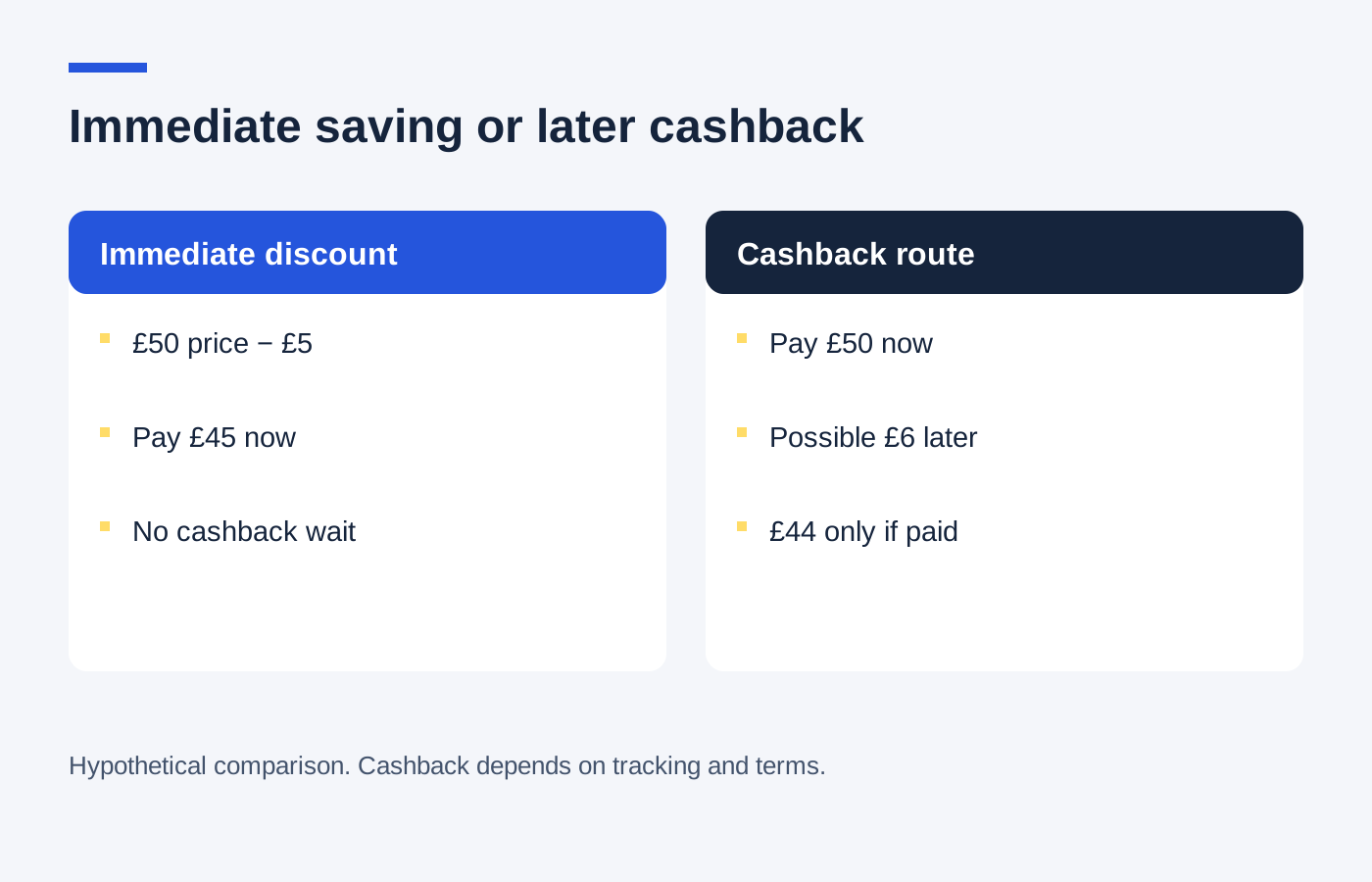
For each option, record the amount due now and the amount you might receive later. Add delivery to the first figure. Put cashback in the second only after reading which products, payment methods and customers qualify. The advertised maximum rate may not apply to your particular purchase.
In a hypothetical example, Shop A charges £100 delivered and offers £8 cashback if the transaction qualifies and is approved. Shop B charges £95 delivered with an immediate discount. Shop A could ultimately cost £92, but you must first pay £100 and the £8 is conditional. Shop B costs £95 without that later step.
If paying £100 creates a budget problem, potential cashback does not make the order affordable today. Compare the options on the amount you can safely pay, then treat the possible reward as a separate advantage rather than money already available in your account.
Find the amount that earns cashback
A cashback rate may exclude delivery, taxes, gift-card payments or particular product categories. Check the retailer page on the cashback service rather than applying the headline percentage to the full receipt. Some offers distinguish new and returning customers or use a fixed payment for a qualifying transaction.
For illustration, 5% cashback on £80 of qualifying value is £4, even if the full payment is £100 after excluded amounts. If the offer says “up to 5%”, a different category could earn less. Keep the rate and eligibility details that apply to the chosen item at the time of purchase.
Check combinations before relying on them
Using a voucher can affect cashback eligibility even when the retailer accepts the code. Gift cards, app purchases and other promotional routes may also have exclusions. Quidco's help information identifies unauthorised voucher use and retailer-specific restrictions as possible reasons for a declined claim.
Do not assume visiting several reward or voucher sites increases the benefit. Referral attribution can be affected by the route used to complete a purchase. Follow the cashback provider's documented process if you choose that route, and keep evidence of the click and order where the service makes it available.
Tracking requirements involve privacy choices as well as money. Read the service's explanation of cookies and tracking, then decide whether you are comfortable participating. You do not need to disable security protections or accept a service you do not want simply to pursue a small potential saving.
Understand the stages after ordering
A tracked transaction is not necessarily ready to withdraw. The retailer may need to confirm the purchase, and cancellations or returns can affect eligibility. Read the provider's explanation of tracked, confirmed and payable statuses rather than treating them as interchangeable.
If the amount is missing or incorrect, check the provider's claim process and time window promptly. Keep the order reference, purchase date, item details and relevant offer terms. Claim deadlines vary, so do not rely on a timetable remembered from another retailer or service.
Check how withdrawal works before valuing the reward. A cash payout, a voucher for another shop and a bonus tied to a particular redemption method can have different usefulness. Select a method you would genuinely use instead of choosing a larger nominal amount that creates another spending requirement.
Choose according to the size of the uncertainty
If the immediate discount is close to the possible cashback saving, simplicity may be worth the small difference. For a larger planned order, the cashback route may merit more attention if the conditions are clear and the higher initial payment is comfortable.
Keep a basic record of pending rewards and remove them from the estimate if an order is returned. Once cashback actually becomes payable and is received, you can record the final net cost. Until then, leave the full checkout payment in your spending record so your budget reflects money that has really left the account.