Check the address, not just the branding
Read the domain carefully, especially after following an advertisement or message. Extra words, swapped letters and an unusual ending can turn a familiar-looking address into a different site. If you meant to visit a known retailer, navigate to its established address independently rather than trusting the link you received.
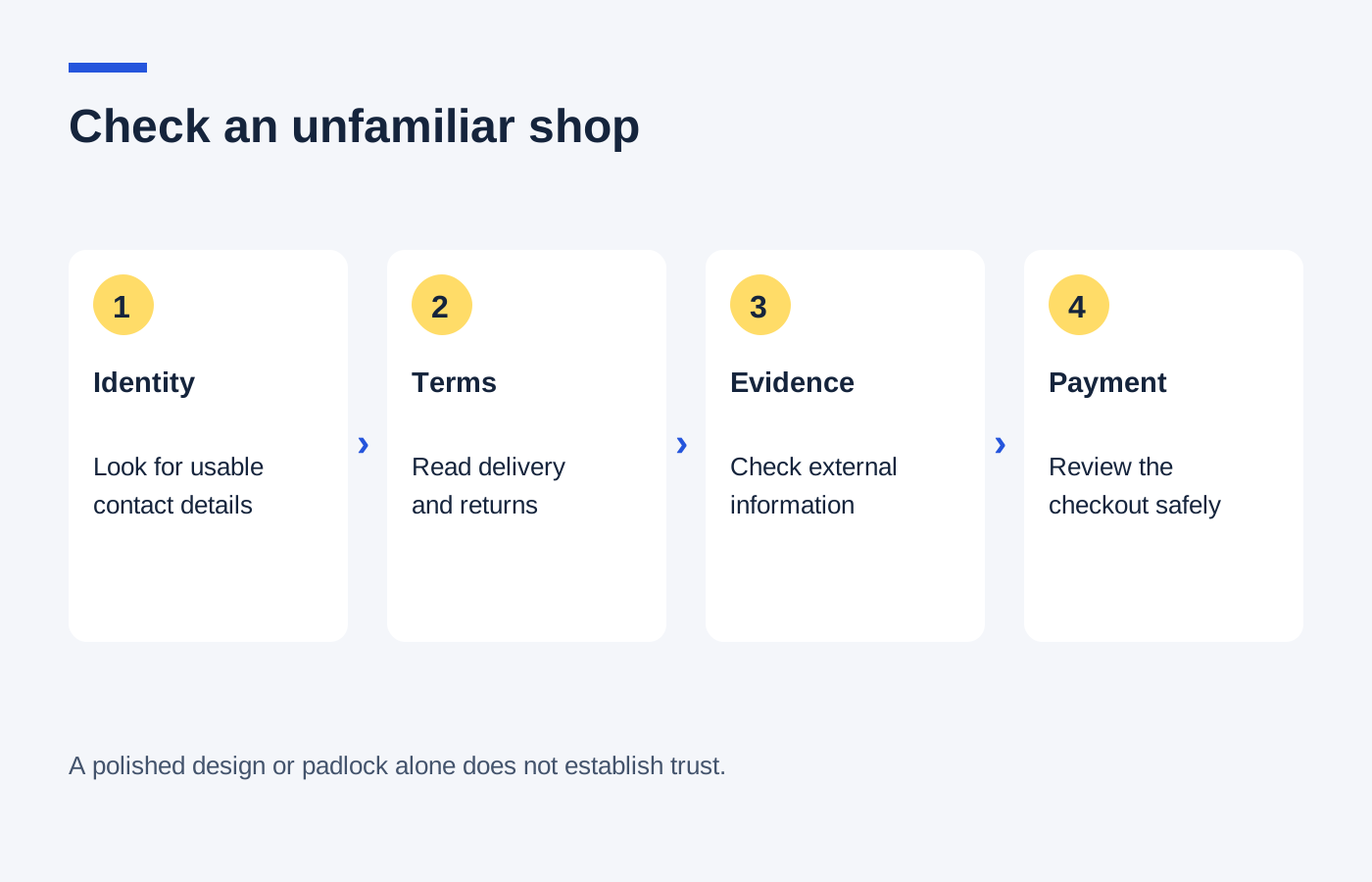
The NCSC warns that fraudulent shops can copy genuine logos, products and page designs. A padlock or HTTPS connection indicates an encrypted connection; it does not by itself establish that the business is legitimate. Treat appearance and connection security as different questions.
Find a seller you can identify
Look for a business name, contact route, delivery information and returns address or process. Check whether these details are consistent across the website. A shop describing itself as UK-based while requiring returns to an undisclosed overseas location needs clarification before you order.
A company registration entry can help identify a claimed business, but matching a name alone is not proof that the website belongs to it. Compare the details and remember that sole traders do not necessarily have a Companies House listing. Use several pieces of evidence rather than one badge or registration number.
Send a short product or delivery question if important details are missing. A useful answer should address the specific issue. No reply, contradictory answers or pressure to pay quickly should make you reconsider, particularly for an expensive purchase.
Look beyond the shop's own reviews
Search the business name and exact website address for information from other customers and organisations. Read recent experiences about delivery, refunds and the product category you are considering. A small number of reviews is not proof of a scam, but it leaves less evidence on which to rely.
Check whether reviews discuss the same seller and product, rather than a similarly named business. Repeated generic wording or comments unrelated to the listing are reasons to investigate further. Do not treat a high average score as a replacement for reading the substance.
Understand the complete order before payment
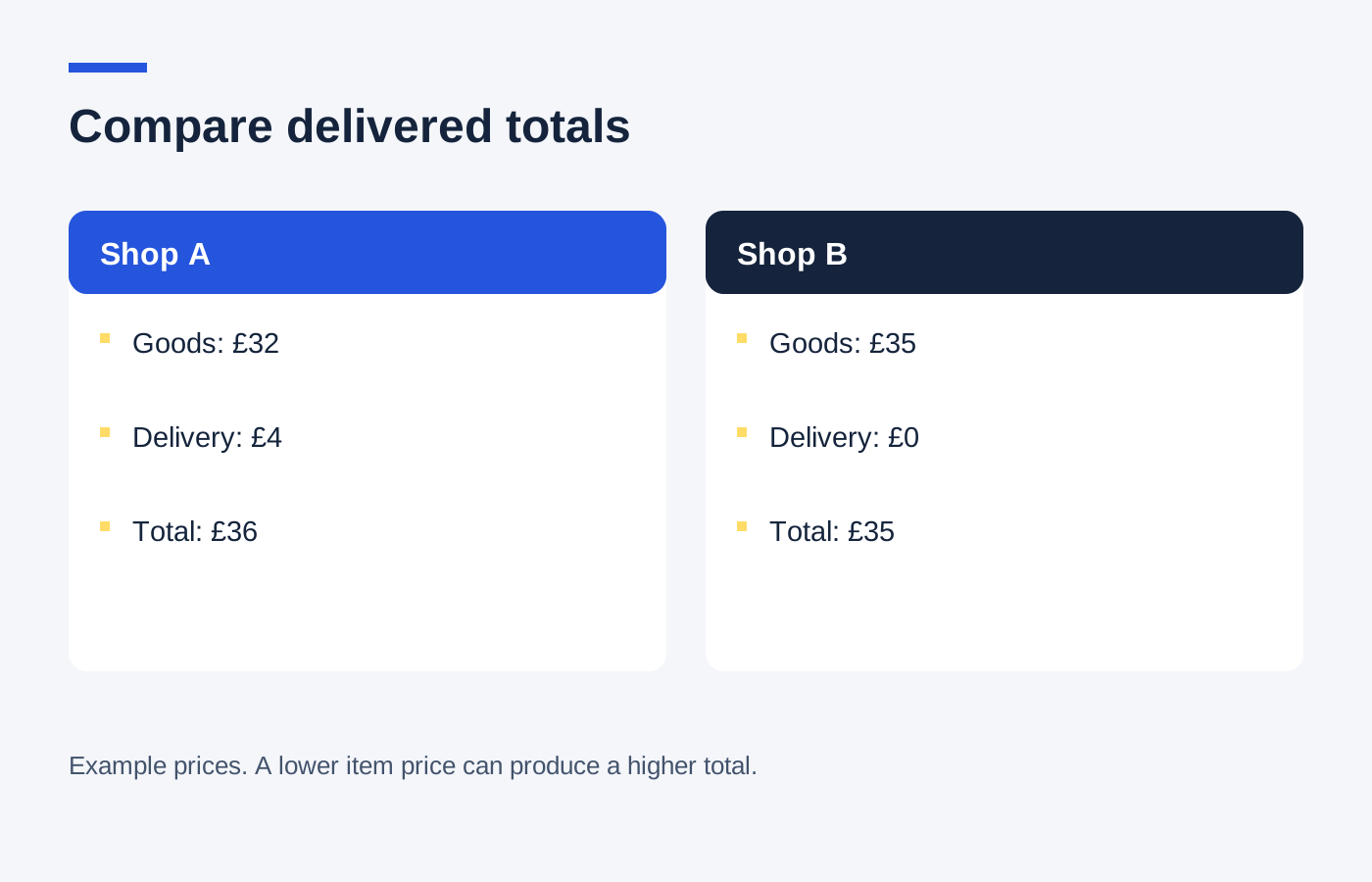
Confirm stock status, delivery destination, arrival estimate and all charges. A remarkably low product price may be paired with high shipping or an extended dispatch period. For goods sent from abroad, check who is responsible for taxes and import charges and where a return would go.
Read the description for condition, size, included accessories and model numbers. A listing can be misleading without being an outright imitation shop. A small example photograph or an ambiguous “compatible with” description should be clarified before the purchase becomes a dispute.
Choose a payment route deliberately
Use a payment method whose protections and dispute process you understand. The NCSC advises against direct bank transfers for online shopping and recommends checking payment-service terms. Do not leave a marketplace's normal checkout because a seller offers a special reduction for paying elsewhere.
Give only the information needed for the transaction. Use a unique password if creating an account, and avoid storing payment details simply because the default box is selected. Never share a one-time authentication code with someone claiming they need it to apply a discount.
Set a clear reason to walk away
If the seller cannot be identified, the return route remains unclear or payment is being redirected to an unexpected person, pause. A lower price does not compensate for a transaction you cannot understand. Choose another retailer or wait until the questions are resolved.
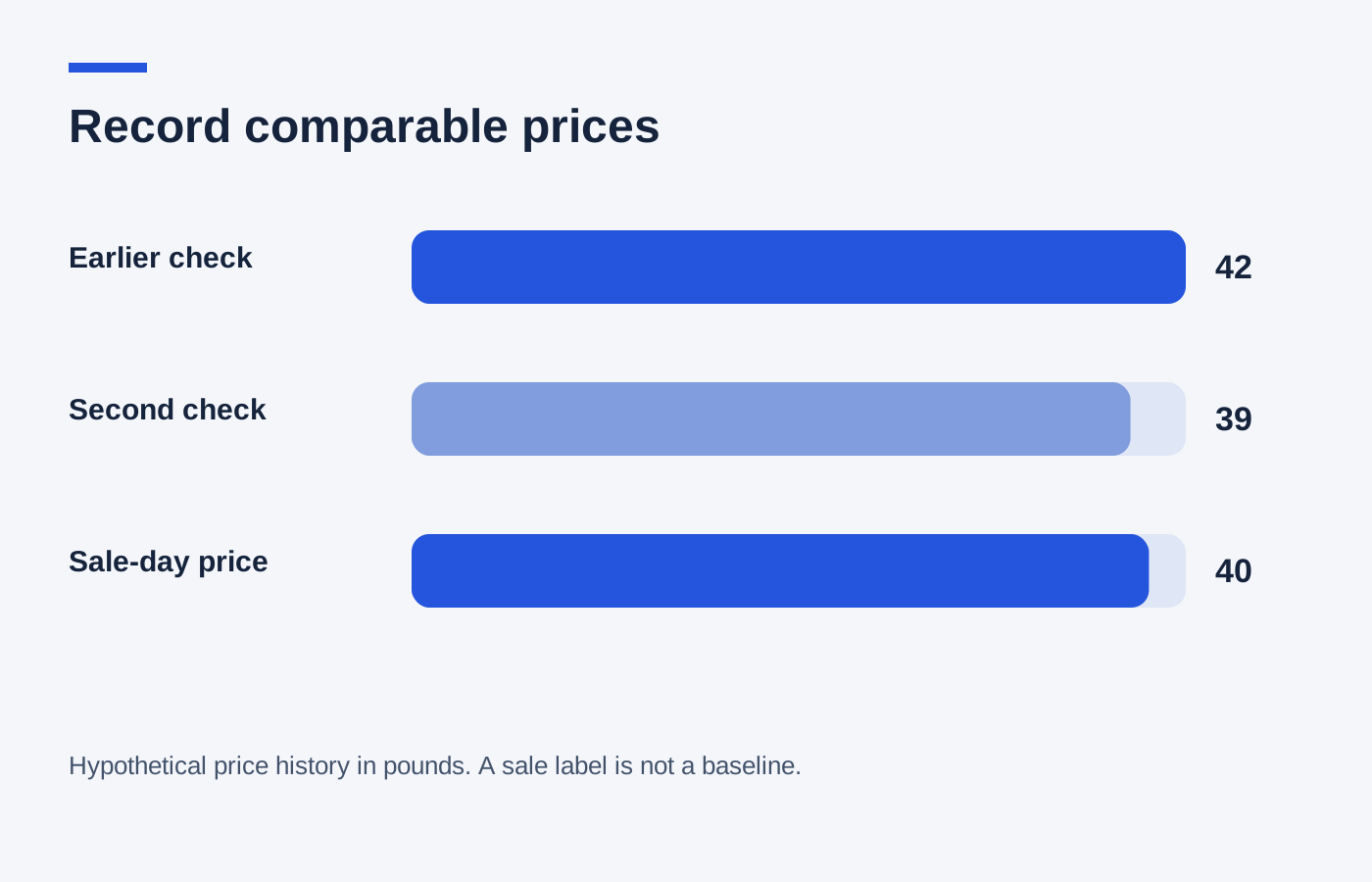
For an order you do place, save the product description, price, promised delivery information and confirmation. If something subsequently goes wrong, those records make it easier to explain the problem to the seller and payment provider. Keep personal records private when asking for help or posting a review.