Give each item a role
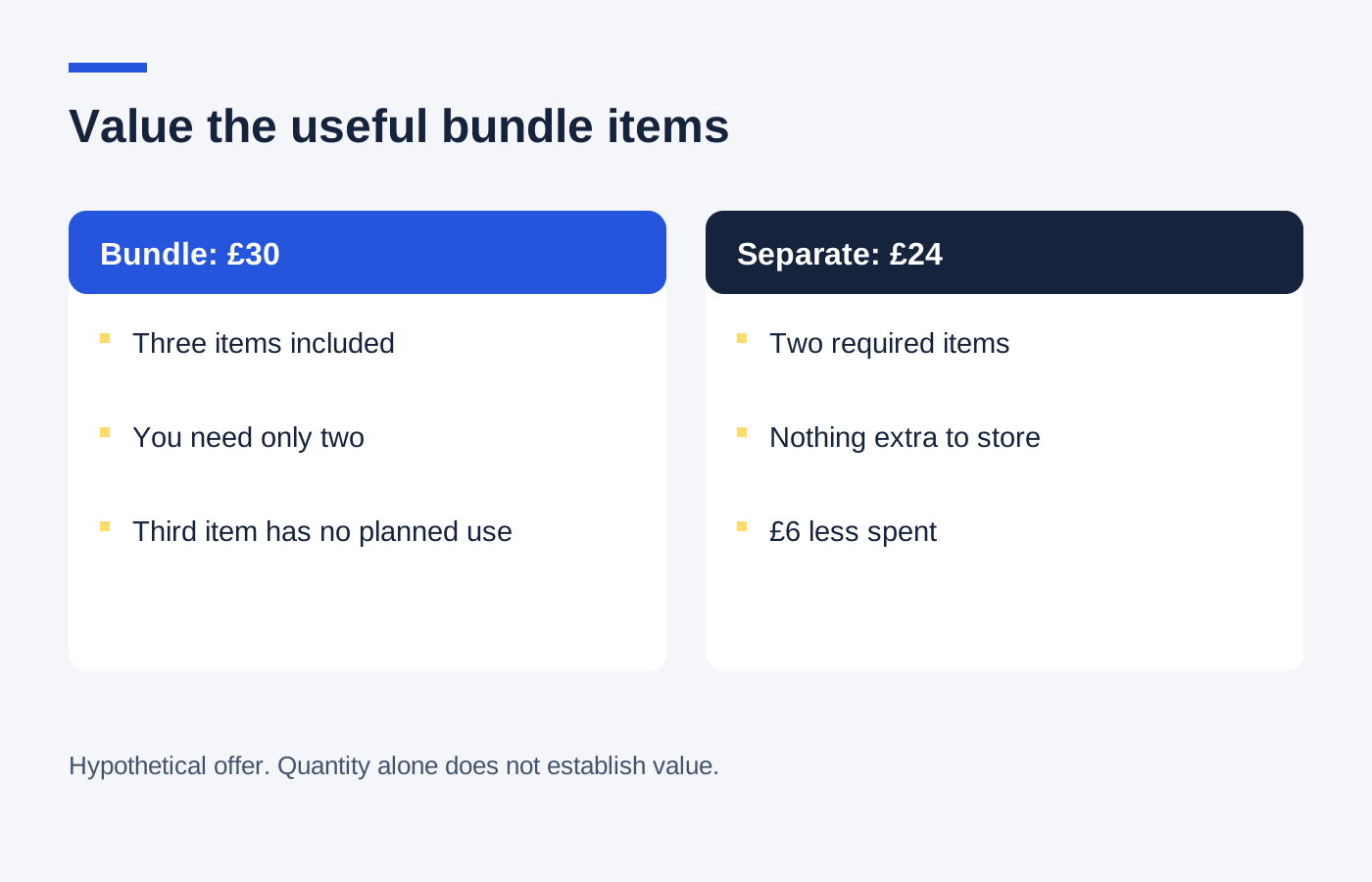
Write down the main product and each accessory or extra. Mark the pieces you already own, cannot use or would not otherwise buy. A second charging cable may be useful for travel; an incompatible connector has no practical value just because it increases the item count.
Check quantities and sizes. A set containing three travel bottles is not equivalent to three full-size products. For household sets, distinguish lids from containers or handles from complete tools so the headline piece count does not distort the comparison.
Price the useful contents separately
Imagine a fictional £45 bundle containing a £32 main item, a £10 accessory you need and an £8 extra you do not want. Buying the useful products separately costs £42 before delivery. The bundle asks you to spend £3 more, even though its advertised component total is £50.
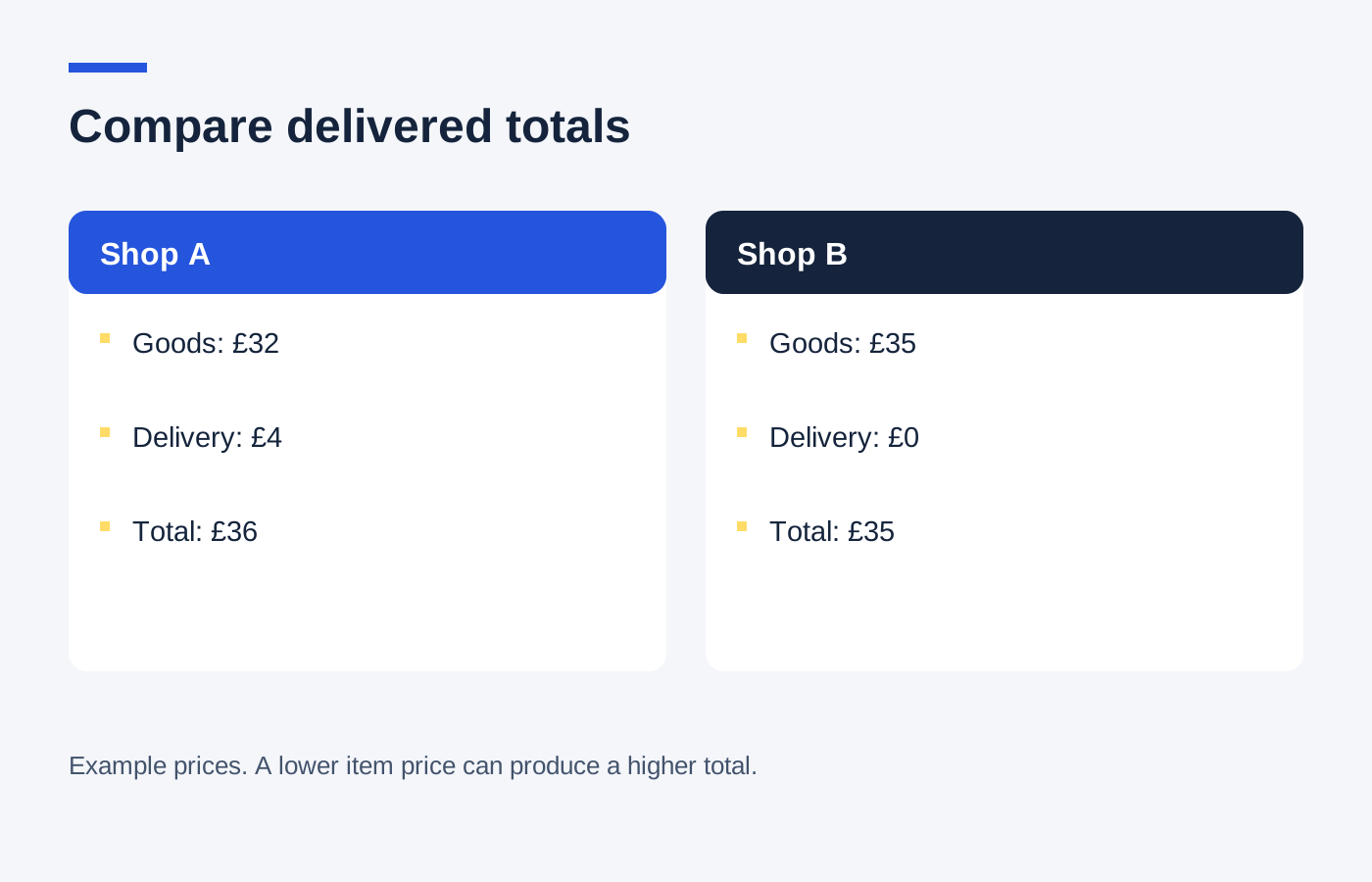
If buying separately creates an additional £5 delivery charge, the bundle could become £2 cheaper overall. Use current prices from shops you would actually buy from, and include the relevant postage rather than mixing unavailable bargains with convenient prices.
Check what happens if one part disappoints
Read whether the bundle is treated as a single product for a change-of-mind return or whether parts can be returned individually. Check how any discount is allocated if an item is missing or replaced. Keep the packaging and order breakdown until you know the set is suitable.
For products with consumables, consider whether the included refills are compatible with the main item and whether replacements are readily available. An introductory supply can lower the first month's cost without making long-term use inexpensive.
Choose a bundle that fits a real collection of needs. If it adds several marginal pieces, a smaller set or one well-chosen product can be easier to store and better value. The number of objects arriving is not the same as the amount of useful shopping completed.